
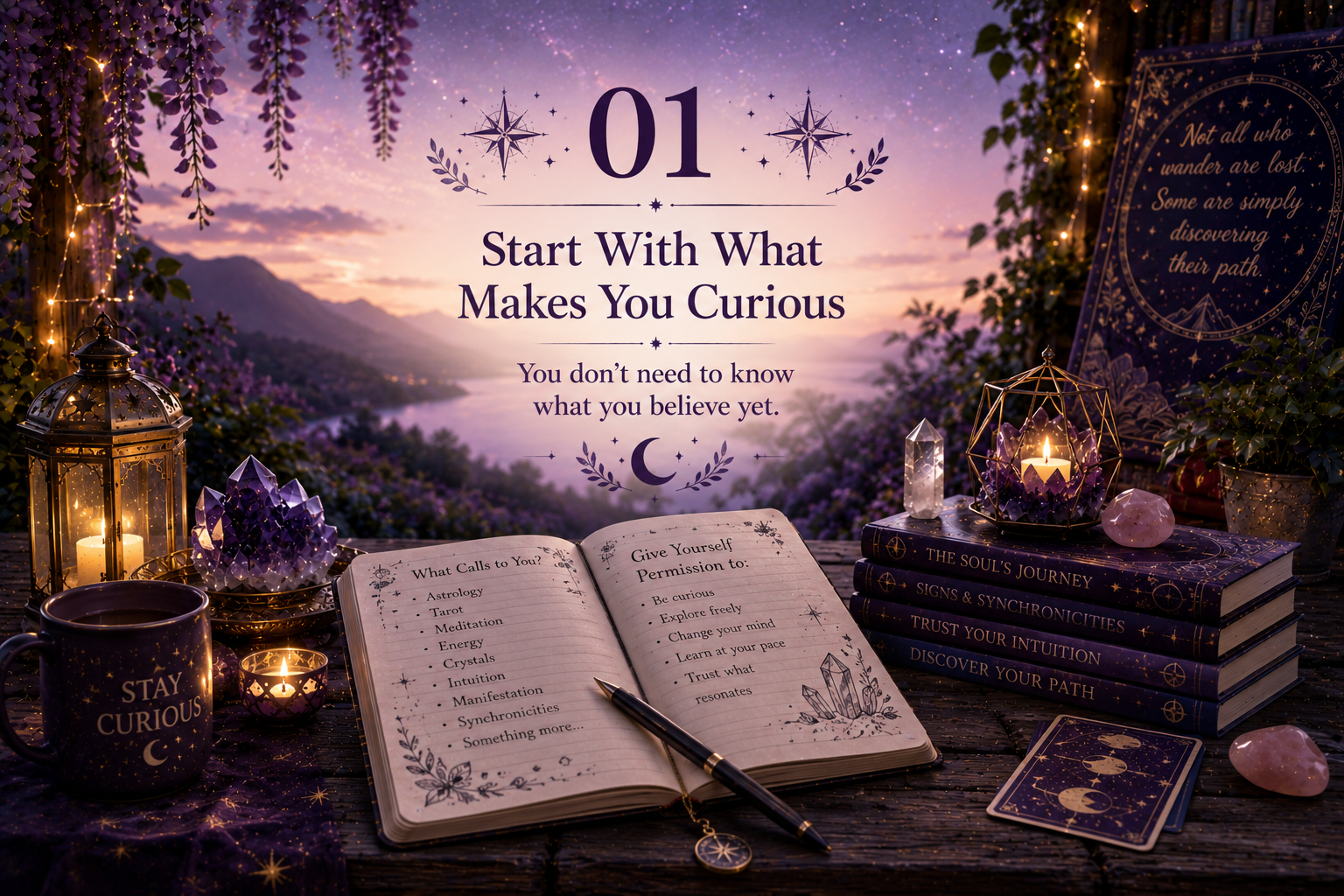
01: Start With What Makes You Curious
You Don’t Need to Know What You Believe Yet
Beginning a spiritual journey does not require having a belief system figured out. You do not need to decide what is real, choose a tradition, or understand exactly where you are going before you begin exploring.
Start with curiosity. Maybe you keep wondering about astrology, tarot, meditation, intuition, energy, dreams, synchronicities, consciousness, manifestation, ancient traditions, or something you cannot quite put into words yet.
Curiosity gives you permission to explore without immediately deciding what you believe. You can learn, ask questions, experience something for yourself, and change your mind along the way. Discovery begins by noticing what keeps drawing your attention.
READ THIS ✦
How Embracing Uncertainty Can Improve Your Life
UC Berkeley’s Greater Good Science Center explores the connection between curiosity and our willingness to enter the unknown. It explains how becoming more comfortable with uncertainty can make it easier to explore new ideas without needing immediate answers or certainty about where they will lead.
→ Read the Article
DO THIS NOW ✦
Step 1: Make Your Curiosity List
Write down five things about spirituality or self-discovery that genuinely make you curious. Do not choose what you think you are supposed to explore. Write what you actually want to understand.
Step 2: Choose the One That Pulls You Most
Look at your list and circle the topic you would most want to learn about if nobody were telling you what you should believe.
Step 3: Follow One Question
Write one question you have about that topic. Then spend a little time exploring it through a reputable article, book, podcast, video, or beginner resource. Your goal is not to find the final answer. Just learn enough to discover what question comes next.
BEFORE MOVING ON ✦
Have at least one topic you genuinely want to explore and one question you want to follow. You do not need to know what you believe yet. For now, curiosity is enough reason to begin.
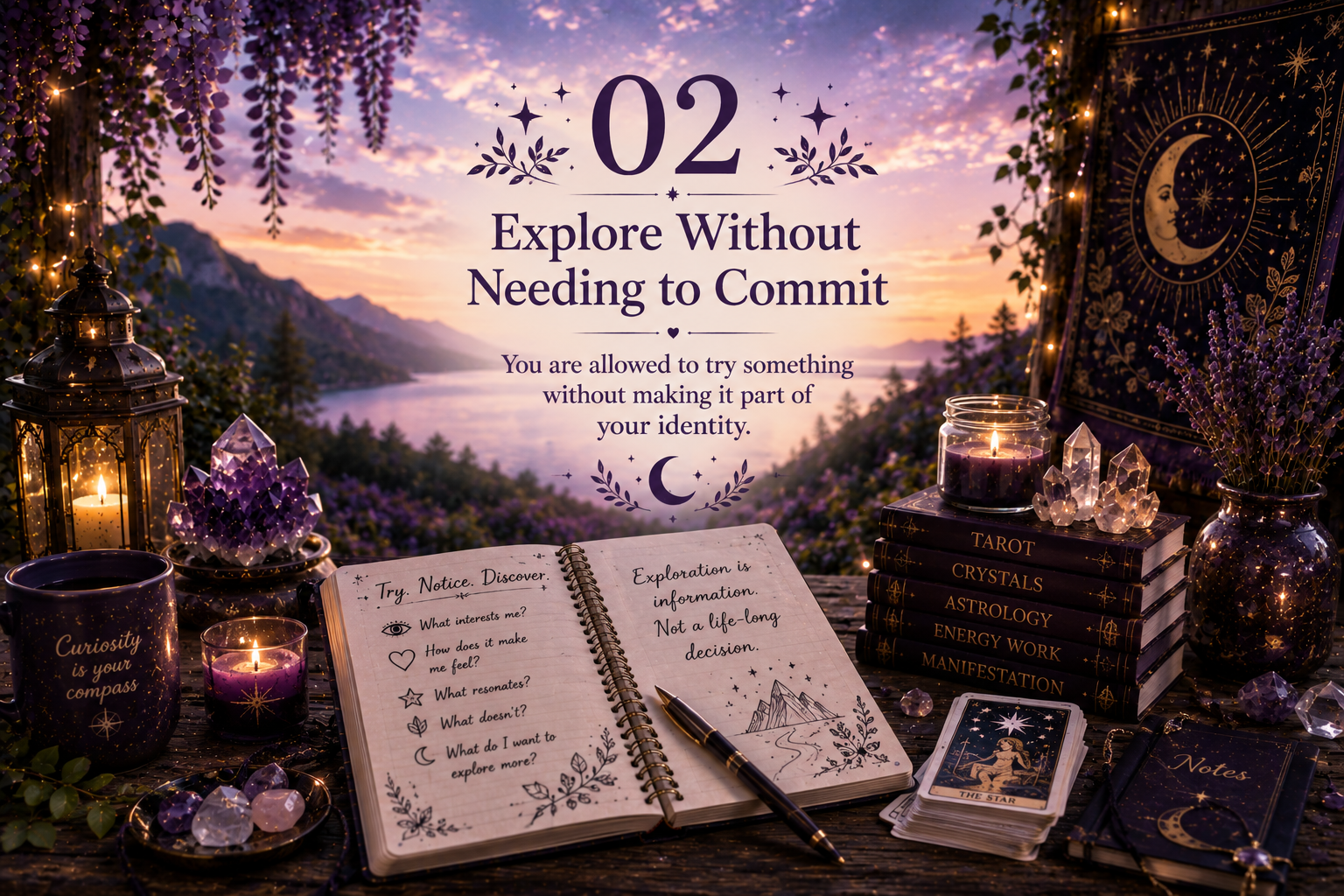
02: Explore Without Needing to Commit
You Are Allowed to Try Something Without Making It Part of Your Identity
Exploration is information, not a lifelong decision.
You can read about astrology without deciding you believe in every part of it. You can try tarot without calling yourself a tarot reader. You can meditate, learn about energy work, explore manifestation, or study different spiritual traditions simply because you are curious.
Sometimes beginners feel pressure to immediately decide whether something is “for them.” Give yourself permission to stay in the middle for a while. Try it. Notice how it feels. Learn more. Keep what resonates and leave what doesn’t.
READ THIS ✦
How Openness to Experience Boosts Creativity and Well-Being
Psychology Today explores “openness to experience,” which includes curiosity, willingness to consider new perspectives, and exploring unfamiliar experiences without needing to already know where they will lead.
→ Read the Article
DO THIS NOW ✦
Step 1: Choose One Thing to Explore
Return to your curiosity list from Section 01 and choose one topic that interests you. Give yourself permission to explore it without deciding whether you believe it yet.
Step 2: Try One Small Experience
Spend a little time actually experiencing the topic instead of only reading about it. Watch a beginner astrology lesson, try a short meditation, pull one tarot card, listen to a podcast, explore a crystal, or learn the basics of something that interests you.
Step 3: Record Your Reaction
Afterward, answer four questions: What interested me? What did I enjoy? What didn’t resonate? What do I want to understand better?
Do not force yourself to label the experience as good, bad, true, or false yet.
BEFORE MOVING ON ✦
Explore at least one spiritual topic without requiring yourself to commit to it. Your job right now is not to choose an identity or belief system. It is to gather experiences, notice what resonates, and keep following your curiosity.
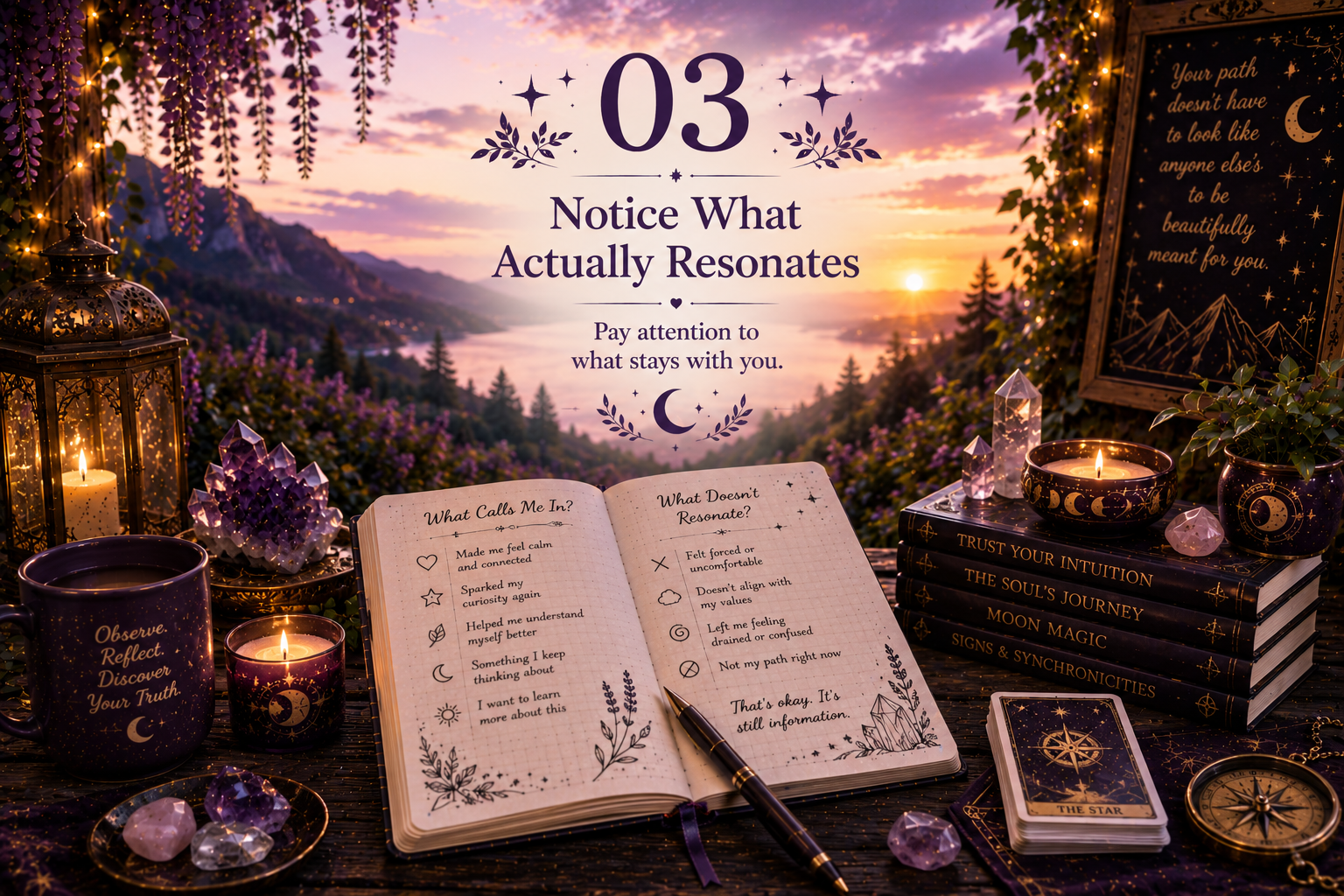
03: Notice What Actually Resonates
Pay Attention to What Stays With You
As you explore different ideas and practices, some things will naturally hold your attention while others will not. That difference is useful information.
Something that resonates might make you feel curious, peaceful, inspired, understood, or eager to learn more. You may find yourself thinking about it again later or wanting to experience it more deeply. Something else may feel forced, confusing, uncomfortable, or simply uninteresting.
You do not have to convince yourself to like something because it is popular or because other spiritual people believe in it. Discovery is partly about noticing your own response and allowing that response to help guide what you explore next.
READ THIS ✦
Cultivating Curiosity
Psychology Today explores how curiosity naturally draws us toward subjects that capture our attention and encourages following genuine interests rather than forcing yourself toward what you think you should care about. It also looks at how curiosity can help us learn more about ourselves through what repeatedly catches our attention.
→ Read the Article
DO THIS NOW ✦
Step 1: Look Back at What You’ve Explored
Think about the spiritual topics, practices, or ideas you have tried so far. Write down anything that made you feel curious, calm, inspired, understood, or interested enough to keep thinking about it.
Step 2: Notice What Didn’t Resonate
Write down anything that felt forced, uncomfortable, confusing, uninteresting, or simply not right for you at this point. You do not need to justify why.
Step 3: Follow What Stayed With You
Choose one thing from your first list that keeps pulling your attention back. Spend a little more time with it this week. Read another source, try the practice again, ask a deeper question, or explore it from a different perspective.
BEFORE MOVING ON ✦
Be able to identify at least one thing that genuinely resonates with you and one thing that does not. You are not deciding what you will believe forever. You are learning to recognize what feels worth exploring more deeply.
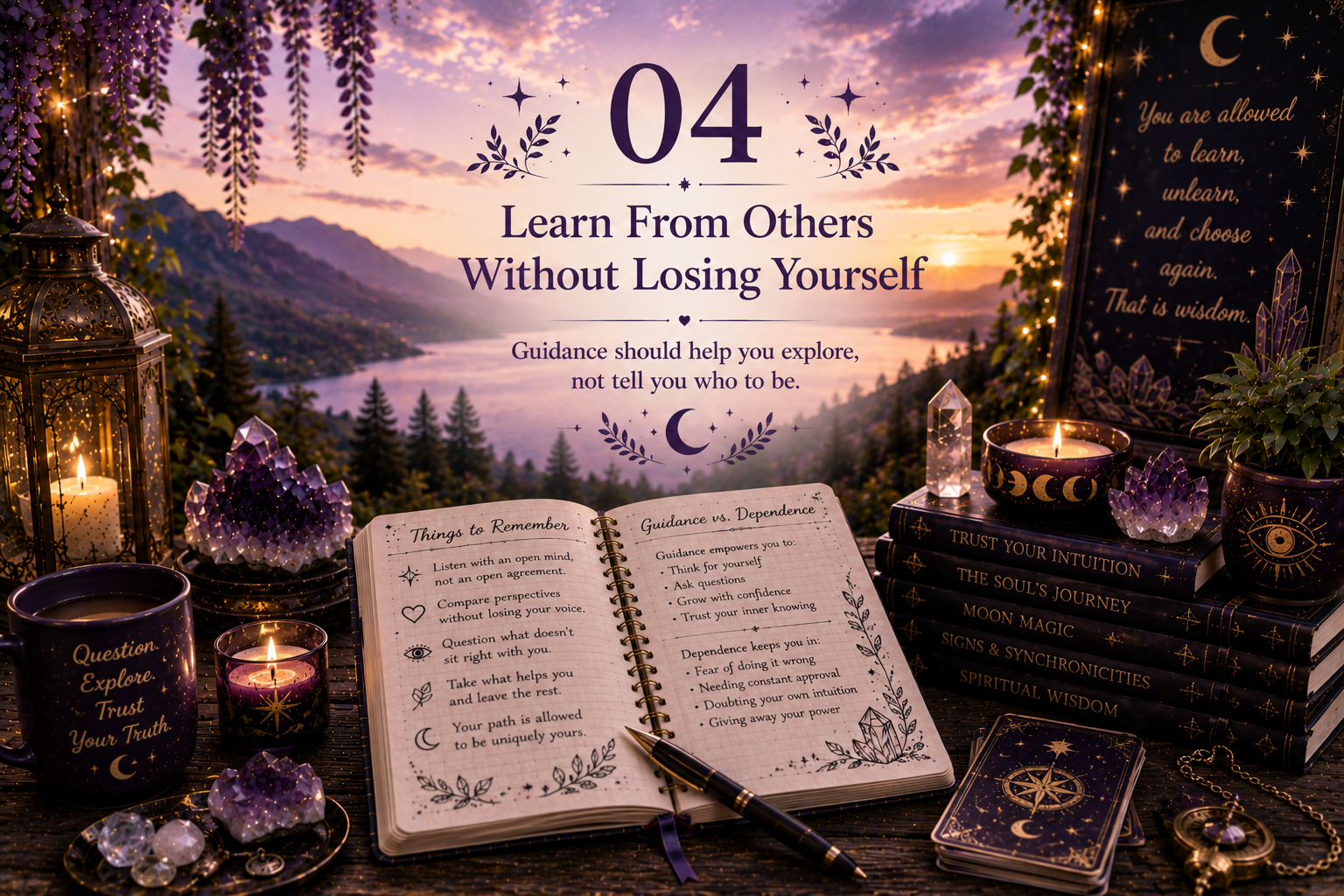
04: Learn From Others Without Losing Yourself
Guidance Should Help You Explore, Not Tell You Who to Be
Learning from other people can open doors you may never have found on your own. Teachers, authors, spiritual practitioners, podcasts, books, and communities can introduce you to new ideas and help you see things from perspectives you had not considered.
But someone else’s confidence does not make their belief your truth. Healthy exploration means listening with an open mind while still asking questions, comparing perspectives, and noticing what genuinely makes sense to you.
You are allowed to learn something, appreciate part of it, disagree with another part, and change your mind later. Guidance should expand your ability to think for yourself, not replace it.
LISTEN TO THIS ✦
How to Let In New Perspectives
UC Berkeley’s Greater Good Science Center explores intellectual humility, which means recognizing that none of us has the complete picture and remaining open to what other people can teach us without automatically abandoning our own perspective.
→ Listen to the Episode
DO THIS NOW ✦
Step 1: Choose One Person You’re Learning From
Think of one author, teacher, creator, spiritual practitioner, or resource you currently follow. Write down one idea from them that has genuinely helped you.
Step 2: Question It for Yourself
Ask: Why does this resonate with me? What evidence or experience supports it? Is there anything about this idea I am unsure about or want another perspective on?
Look at least one other reputable source before deciding what you think.
Step 3: Keep What Helps, Leave What Doesn’t
Write down what you want to take from what you learned and what you are not ready to accept, do not agree with, or simply want to keep exploring.
BEFORE MOVING ON ✦
Be able to learn from someone else without feeling like you have to accept everything they believe. Your path can be influenced by many voices while still remaining your own.
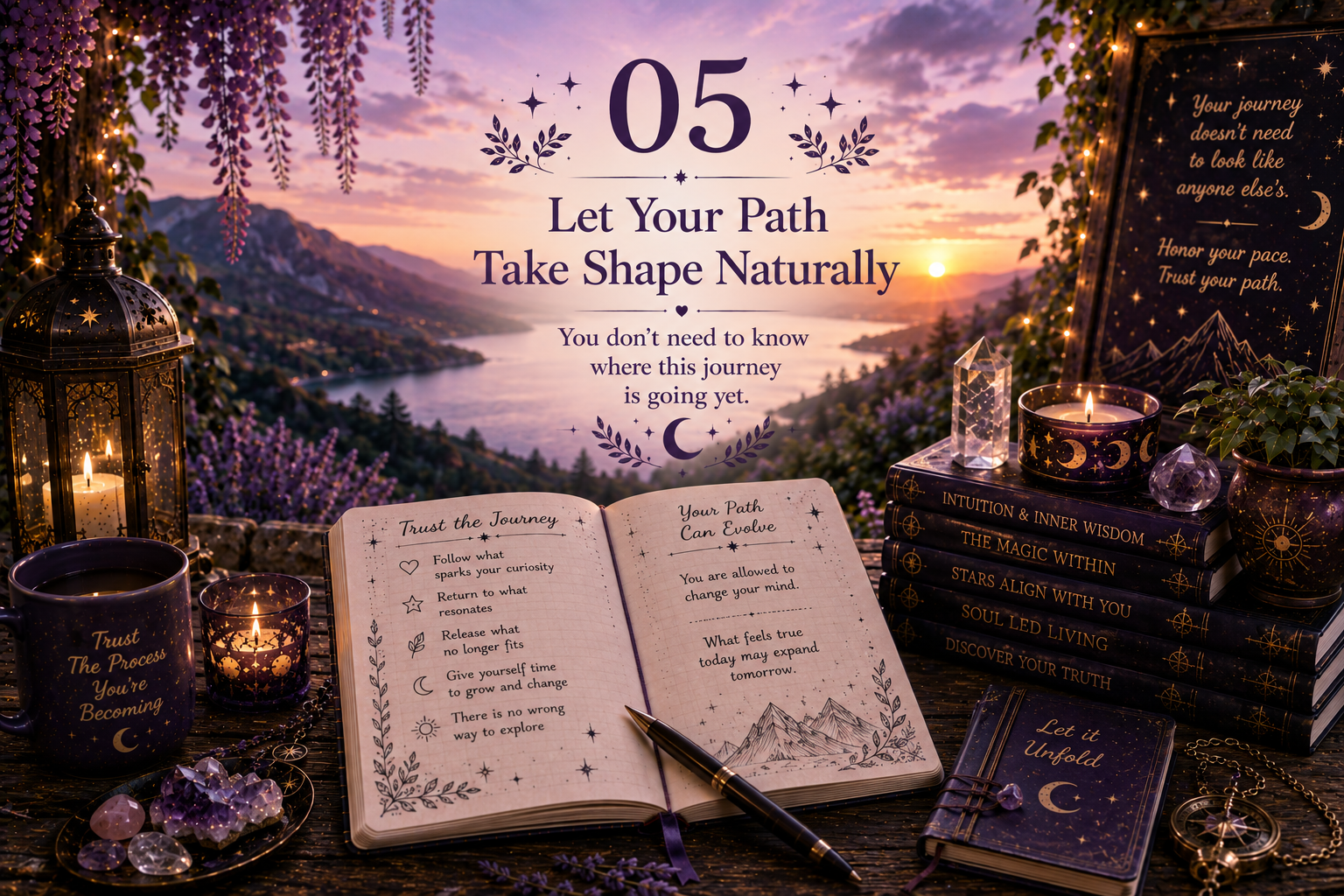
05: Let Your Path Take Shape Naturally
You Don’t Need to Know Where This Journey Is Going Yet
Discovery is not about reaching a final answer. It is about giving yourself enough freedom to explore, learn, change your mind, and gradually notice what becomes meaningful to you.
The things that interest you now may deepen over time, or they may lead you somewhere completely unexpected. You might begin with tarot and become more interested in intuition. You might explore astrology and find yourself drawn toward self-reflection, healing, or meditation instead.
Your path does not need to look organized from the beginning. You are allowed to follow what resonates today and let tomorrow reveal the next question.
READ THIS ✦
How Purpose Changes Across Your Lifetime
UC Berkeley’s Greater Good Science Center explores research showing that purpose is not something everyone discovers once and follows forever. Our interests, values, identity, and sense of direction can continue changing throughout life. Purpose can develop gradually as we explore what matters to us and what kind of person we want to become.
→ Read the Article
DO THIS NOW ✦
Step 1: Look at Where Your Curiosity Has Taken You
Review what you explored throughout this step. Write down the topics, practices, or ideas that still interest you enough that you want to continue learning about them.
Step 2: Notice What Has Changed
Ask yourself: Did anything surprise me? Did I lose interest in something I thought I would love? Did one topic lead me toward another? Is there anything I understand differently now than when I started?
Let those changes count as discovery too.
Step 3: Choose Your Next Direction
Pick one thing you want to explore next. You do not need to decide where it will ultimately lead. Choose the next book, practice, question, class, podcast, or experience that genuinely interests you and follow it from there.
BEFORE MOVING ON ✦
Have one direction you want to explore next without requiring yourself to know where it will eventually lead. Your path is allowed to unfold gradually. You are not behind because you are still discovering. Discovery is the path.