

01: Notice What You Already Know
Your Inner Knowing May Be Quieter Than You Expect
Sometimes you already have a sense of what feels right, what feels off, what you want, or what needs your attention before you can fully explain why.
That inner knowing does not always arrive as a dramatic gut feeling or unmistakable sign. It may be a quiet preference, a subtle hesitation, a thought that keeps returning, or a simple sense that something fits or does not fit.
The goal is not to assume every feeling is intuition or ignore facts and logic. It is to begin noticing your own response before immediately looking outside yourself for someone else to tell you what to think.
READ THIS ✦
In Gut We Trust When It Comes to Choices
The American Psychological Association summarizes research on intuitive decision-making and how choices based on our feelings can feel more connected to our sense of who we really are. It is a useful reminder that your internal response can be part of the information you consider when making a choice, even when it should not be the only information you use.
→ Read the Article
DO THIS NOW ✦
Step 1: Choose One Small Question
Think of something you are currently unsure about that does not carry major consequences. Ask yourself the question before asking anyone else what they think.
Step 2: Notice Your First Response
Pause for a moment and write down what appears first. It might be a thought, feeling, preference, hesitation, body sensation, or simple yes or no.
Do not decide whether it is “right” yet. Just notice it.
Step 3: Compare It With What You Know
Now consider the facts, your values, and anything else that matters. Ask yourself: Does my first response still make sense after I look at the whole picture? Was there something I already understood before I started analyzing it?
BEFORE MOVING ON ✦
Be able to recognize at least one way your own inner response tends to show up before outside opinions and overthinking enter the picture. You are not learning to blindly trust every feeling. You are learning to include your own voice in the conversation.
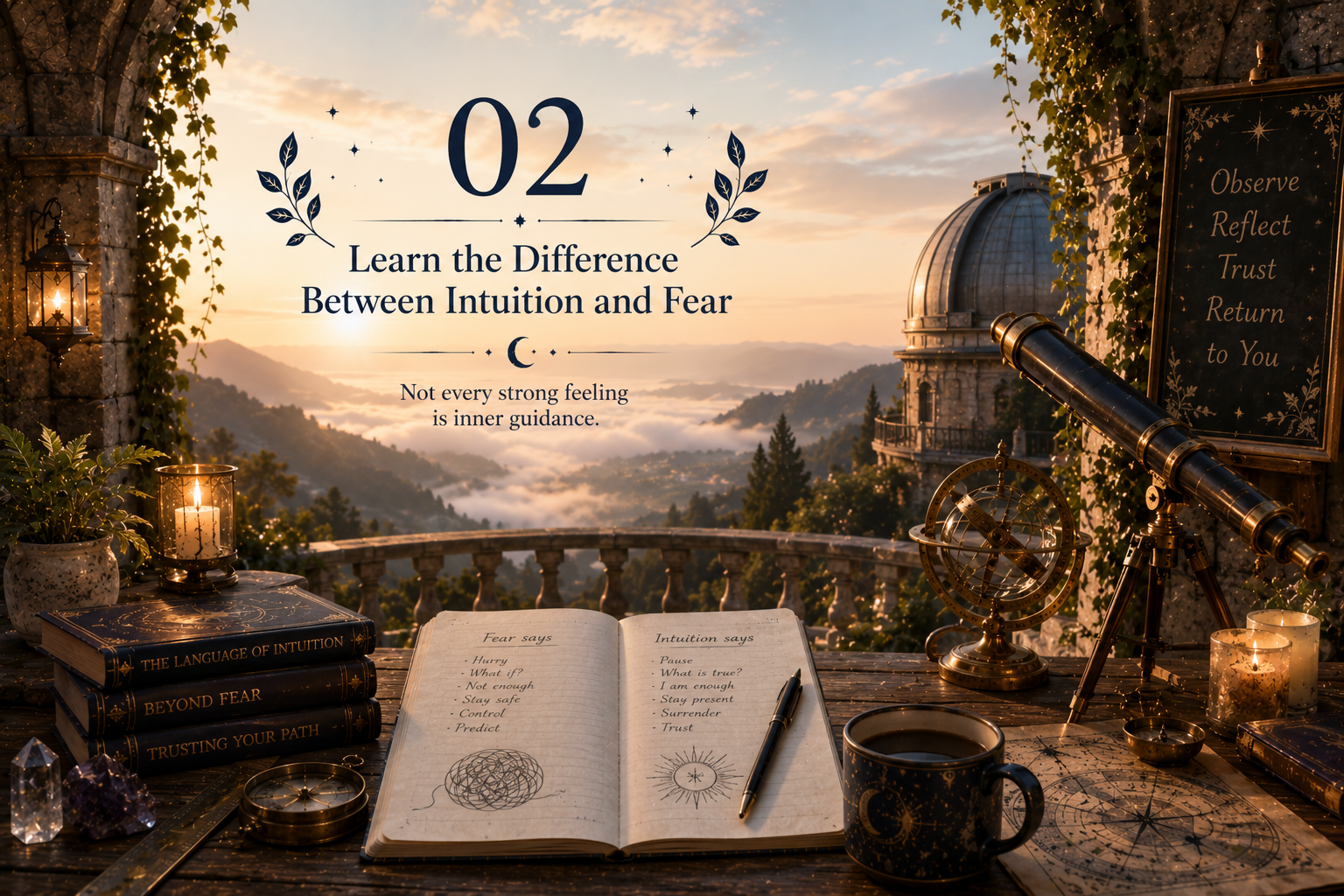
02: Learn the Difference Between Intuition and Fear
Not Every Strong Feeling Is Inner Guidance
Fear and intuition can both feel powerful, which is why they can be difficult to tell apart at first.
Fear often comes with urgency. Your mind may race through worst-case scenarios, demand certainty, or tell you that you need to act immediately to stay safe. Intuition is often quieter. It may appear as a simple feeling, thought, hesitation, or sense of knowing without a long story attached to it.
Neither one is automatically right or wrong. Fear can alert you to genuine danger, and intuition can sometimes be influenced by past experiences or assumptions. The goal is not to perfectly label every feeling. It is to slow down enough to understand what may be influencing your response before you decide what to do.
READ THIS ✦
How to Tell the Difference Between Fear and Intuition
Psychology Today explains some of the ways fear and intuition can feel different, including urgency, physical sensations, internal dialogue, and whether the feeling becomes louder as you continue thinking about it. It also offers a simple exercise for noticing your first response before overthinking takes over.
→ Read the Article
DO THIS NOW ✦
Step 1: Notice the Feeling Before You Act
The next time you have a strong reaction to a small decision, pause. Ask yourself: Does this feel urgent and frantic, or quieter and more steady? What is happening in my body right now?
Step 2: Listen to the Story Attached to It
Write down what your mind is saying. Fear may sound like: “What if something goes wrong?” “I need to know now.” or “I can’t handle making the wrong choice.”
Then ask: Is there a quieter message underneath all of that? Maybe it is simply, “I don’t want this,” “Something feels off,” or “I want to give this a chance.”
Step 3: Give It Time
Unless the situation requires immediate action for safety, wait before deciding. Return to the question when you feel calmer and ask yourself what still feels true.
Notice which parts of the original reaction faded once the urgency settled and which parts remained.
BEFORE MOVING ON ✦
Be able to recognize at least one difference between how fear tends to show up for you and how a quieter inner response feels. You do not need to perfectly identify every feeling. You are learning to pause, observe, and understand yourself before you choose.
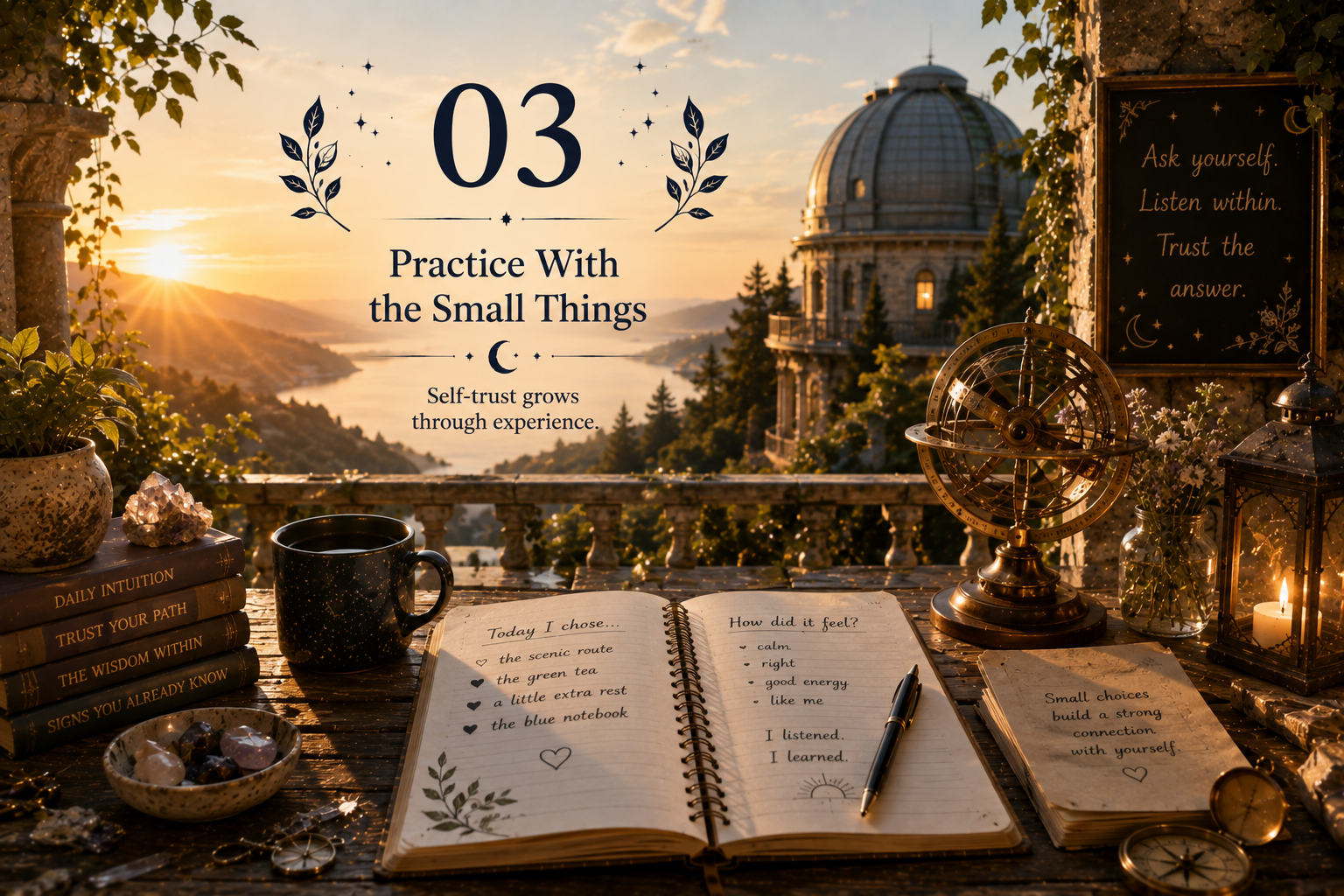
03: Practice With the Small Things
Self-Trust Grows Through Experience
Learning to trust yourself does not have to begin with major life decisions. In fact, everyday choices give you a safer place to practice noticing your own preferences and following them without needing reassurance from someone else.
Which route do you want to take? What sounds good for dinner? Do you want quiet or company? Which task feels right to start first?
The outcome of these small choices is not especially important. What matters is giving yourself repeated opportunities to listen, choose, and notice what happens. Self-trust grows through experience, not through waiting until you feel completely certain.
READ THIS ✦
How to Trust Your Gut Instead of Overthinking
Psychology Today recommends practicing intuition with small, low-stakes decisions before trying to rely on it for larger choices. Starting small allows you to notice your initial response, make a decision without endless analysis, and gradually become more comfortable trusting yourself.
→ Read the Article
DO THIS NOW ✦
Step 1: Make One Small Choice Yourself
Once a day for the next five days, choose something that has very little consequence. Pick your route, meal, outfit, activity, music, or what you want to do with a little free time.
Before asking anyone else or weighing every option, pause and notice what you are naturally leaning toward.
Step 2: Follow Your Choice
When it is safe and reasonable, choose the option you were drawn to. Then let the decision be finished instead of immediately questioning whether another option would have been better.
Step 3: Notice How It Felt
Later, write down how the experience felt. Did you feel calm, relieved, energized, indifferent, uncomfortable, or something else? You are not keeping score of whether your intuition was “right.” You are learning what choosing for yourself feels like.
BEFORE MOVING ON ✦
Make at least five small decisions without immediately looking for someone else to confirm them. The goal is not perfect choices. It is becoming more comfortable listening to yourself, choosing, and learning from your own experience.
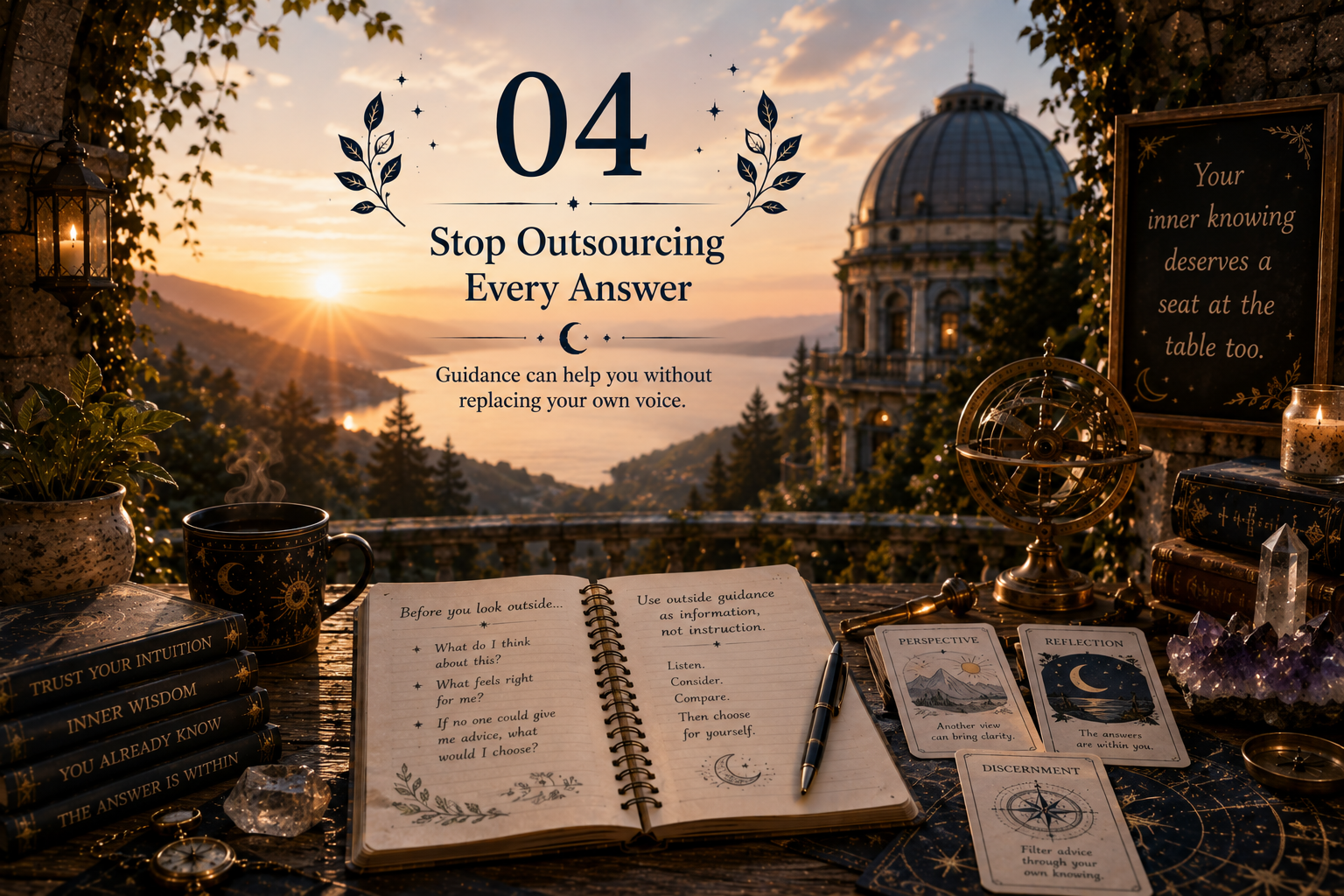
04: Stop Outsourcing Every Answer
Guidance Can Help You Without Replacing Your Own Voice
Advice can be incredibly useful. Other people can offer experience, information, perspective, and possibilities you may not have considered.
The problem begins when asking for guidance becomes asking someone else to make the decision for you. You may find yourself polling several people, searching for one more opinion, repeatedly asking for reassurance, or changing your answer whenever someone disagrees with you.
Outside guidance works best as information, not instruction. You can listen, consider, compare, and still let your own values, needs, and judgment have a seat at the table.
READ THIS ✦
Build the Confidence to Trust Yourself
Psychology Today explores how frequently looking outside ourselves for answers can weaken confidence in our own opinions. It discusses learning to listen to outside perspectives without automatically giving them more authority than your own judgment.
→ Read the Article
DO THIS NOW ✦
Step 1: Answer Yourself First
The next time you want someone’s advice, pause before asking. Write down: What do I think about this? What feels right for me? If no one could give me advice, what would I choose?
Step 2: Use Outside Guidance as Information
If you still want another perspective, get it. But instead of asking, “What should I do?” try asking, “Is there anything I may not be considering?”
Listen. Compare. Gather information. Then bring the decision back to yourself.
Step 3: Make the Final Choice Yourself
Before deciding, ask: Does this advice actually fit my values, needs, and situation, or am I following it because I am afraid to trust my own answer?
Choose what makes the most sense to you after considering the whole picture.
BEFORE MOVING ON ✦
Make at least one decision where you listen to your own answer before seeking outside guidance and make the final choice yourself. Support can help you see more clearly, but it does not have to replace your own voice.

05: Let Yourself Choose Without Certainty
You Can Trust Yourself Without Knowing Exactly What Happens Next
It is easy to believe you need certainty before making a choice. You may keep thinking, researching, waiting for a sign, or looking for reassurance because you want to know you are making the “right” decision.
But self-trust is not knowing exactly how everything will turn out. It is trusting that you can make the best choice you can with what you know now, then respond, learn, and adjust as more becomes clear.
You are allowed to move forward without having every answer. A choice does not have to guarantee the future to be worth making.
READ THIS ✦
Why You Don’t Trust Yourself When It Matters Most
Psychology Today explains why important decisions can trigger second-guessing, overthinking, and fear of regret. It also explores a more useful kind of confidence: trusting your ability to handle what happens after you choose rather than needing certainty beforehand.
→ Read the Article
DO THIS NOW ✦
Step 1: Name the Choice
Think of one decision you have been hesitating to make because you do not feel completely certain yet.
Write down: What am I actually trying to decide?
Step 2: Change the Question
Instead of asking, “How do I know this is the right choice?” ask:
“Do I trust myself to handle what happens after I choose?”
Notice whether the second question feels different.
Step 3: Choose the Next Step
You do not need to commit to the entire future today. Decide what the next reasonable step is based on what you know, need, and value right now.
Then take that step.
BEFORE MOVING ON ✦
Make one choice without waiting for complete certainty. Pay attention to what happens afterward. Every time you choose, respond, learn, and adjust, you gather evidence that you are capable of finding your way.