
01: Identify the Moment of Choice
Small Choices Create Big Change
Old patterns often happen so quickly that it can feel like you never made a choice at all. Something happens, you feel the familiar pull, and your usual response takes over before you have time to think about it.
The moment of choice is the small space where you notice that first impulse and realize you have options. You may still feel like apologizing, fixing, pleasing, withdrawing, defending yourself, or saying yes. The difference is that you are beginning to notice the impulse before automatically following it.
You do not need to make the perfect choice every time. At first, the goal is simply learning to recognize the moment when a different response becomes possible.
READ THE RESEARCH ✦
Snapping Out of Autopilot
Research published in NeuroImage explores how habitual responses can be triggered automatically and how bringing a habit into conscious awareness creates an opportunity to compare that automatic response with what you actually want to do. That awareness is an important part of interrupting an old pattern and choosing a more intentional action.
→ Read the Research
DO THIS NOW ✦
Step 1: Notice the First Impulse
For the next few days, pay attention to one situation where an old pattern usually appears. Notice the very first thing you want to do before you act.
Step 2: Ask Yourself One Question
Pause and ask: “What would I normally do here, and what do I actually want to do this time?”
You do not have to choose differently yet. Simply noticing that there is more than one option is part of the work.
Step 3: Make One Intentional Choice
When you feel ready, choose one small response that better supports you. That might mean waiting before answering, saying no, asking for time, speaking honestly, walking away, or deciding not to take responsibility for something that is not yours.
BEFORE MOVING ON ✦
Be able to recognize at least one moment when an old response begins and identify the point where you have an opportunity to choose differently. You cannot change every pattern at once, but you can begin noticing the moments where change becomes possible.
02: Choose a New Response
A Different Response Creates a Different Pattern
Once you recognize the moment of choice, you can begin experimenting with what you want to do instead.
A new response does not have to be dramatic. It might mean pausing instead of immediately explaining yourself, saying no instead of automatically agreeing, asking a question instead of assuming, or giving yourself time before deciding.
The first few times you respond differently may feel uncomfortable simply because the old response is familiar. That does not mean the new choice is wrong. You are practicing a behavior your mind and body have not had as much experience with yet.
READ THIS ✦
Cognitive Behavioral Therapy
Mayo Clinic explains how thoughts, feelings, and behaviors can become connected patterns and how becoming aware of those patterns can help you respond to difficult situations in more effective ways. With practice, newer and more helpful responses can become easier and more familiar.
→ Read the Article
DO THIS NOW ✦
Step 1: Name the Old Response
Choose one situation where you regularly fall into an old pattern. Finish this sentence: “When ______ happens, I usually ______.”
Step 2: Choose Your New Response
Ask yourself: “What could I do instead that would better support me?”
Keep it realistic. Your new response might be asking for time, saying no, setting a boundary, speaking honestly, walking away, or simply waiting until you feel calmer before answering.
Step 3: Practice It Once
Look for one opportunity to use your new response. Afterwards, write down what happened, how it felt, and whether the new choice supported you better than your usual reaction.
BEFORE MOVING ON ✦
Have one old automatic response you can clearly recognize and one new response you are actively practicing in its place. The new choice does not have to feel natural yet. Repetition is how it becomes more familiar.
03: Repeat the New Choice
Change Your Patterns
One different response can create a new possibility. Repeating that response is how a new pattern begins to take shape.
Old behaviors became familiar because you practiced them over time, often without realizing it. New responses work the same way. Each time you pause, honor a boundary, choose peace over approval, or respond differently than you normally would, you give that new behavior another opportunity to become familiar.
You will not choose differently every time. Stress, fear, or exhaustion may sometimes pull you back toward an old response. That does not erase your progress. Notice what happened, give yourself some grace, and practice the new choice again when the next opportunity appears.
READ THIS ✦
Creating Healthy Habits
The National Institutes of Health explains how repeated behaviors can become automatic and why changing a pattern involves recognizing triggers, creating a plan, practicing new responses, and continuing even when setbacks happen. The focus is on small, realistic changes that can become easier with repetition.
→ Read the Article
DO THIS NOW ✦
Step 1: Choose the Response You Want to Strengthen
Return to the new response you chose in Section 02. Write it somewhere you will see it and make it specific. For example: “When I feel pressured to answer immediately, I will give myself time before responding.”
Step 2: Look for Opportunities to Practice
For the next week, notice each time the old pattern appears. When you can, intentionally choose your new response. Keep a simple note of each time you practice it.
Step 3: Review Your Progress
At the end of the week, ask yourself: When was the new response easier? What made it harder? What helped me follow through? If you slipped into the old pattern, include that too. You are learning what helps the new choice become stronger.
BEFORE MOVING ON ✦
Practice your new response more than once. You do not need to erase an old pattern overnight. Progress is built one choice at a time, and every repetition gives the new pattern another chance to grow.
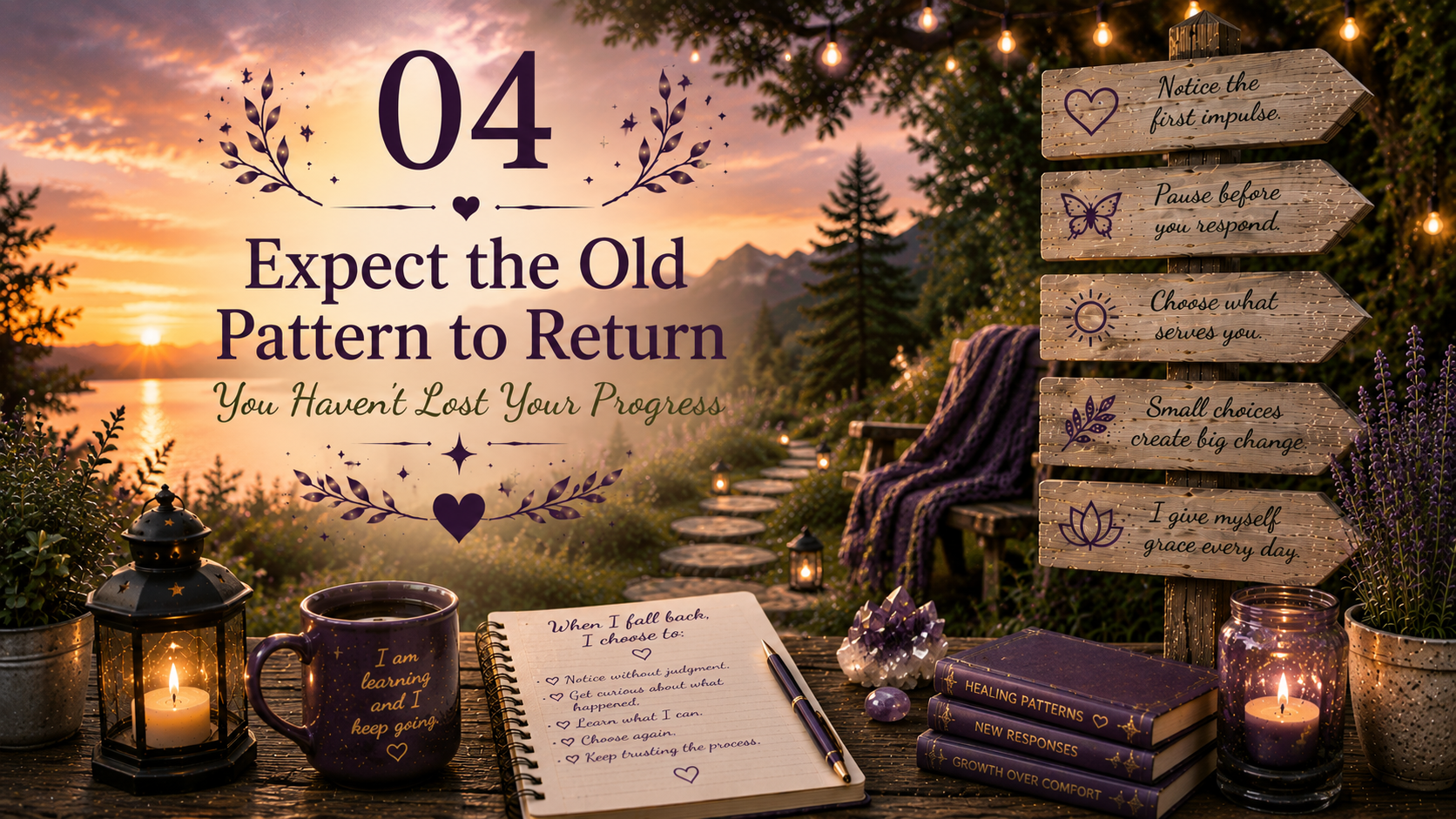
04: Expect the Old Pattern to Return
You Haven’t Lost Your Progress
Changing an old pattern does not mean it disappears completely. Familiar responses can still show up when you are stressed, tired, overwhelmed, triggered, or placed back in a situation where you used to rely on them.
You may people-please again, ignore a boundary, react before pausing, or make a choice you thought you had already moved beyond. That does not mean you are back at the beginning.
Healing includes learning what to do when an old pattern returns. Instead of judging yourself or deciding that nothing has changed, notice what happened, understand what made the old response easier to fall into, and choose again when the next opportunity appears.
READ THIS ✦
Changing Your Habits for Better Health
The National Institute of Diabetes and Digestive and Kidney Diseases explains that behavior change is a process and that setbacks can happen even after new habits have begun feeling familiar. Progress comes from recognizing roadblocks, learning from slip-ups, and continuing instead of treating one old response as proof that the change did not work.
→ Read the Article
DO THIS NOW ✦
Step 1: Notice Without Judging
The next time you fall into an old pattern, pause before criticizing yourself. Write down what happened, what you were feeling, and what may have made the old response easier to fall back into.
Step 2: Look for the Trigger
Ask yourself: Was I tired, stressed, afraid, overwhelmed, caught off guard, or back in a familiar situation? Understanding what pulled you toward the old response gives you information you can use next time.
Step 3: Choose Again
Ask: “What would I like to do differently now?” You may be able to correct the situation immediately, or you may simply make a different choice the next time the pattern appears. Either one counts as continuing the work.
BEFORE MOVING ON ✦
Be able to experience an old pattern returning without treating it as proof that you have failed. Healing does not require never slipping backward. It means noticing sooner, learning from what happened, and continuing to choose differently when you can.

05: Notice Who You’re Becoming
Your Growth Is Real
When you are focused on changing old patterns, it can be easy to notice every time you slip back and overlook all the ways you are already responding differently.
Growth is not always dramatic. Sometimes it looks like recognizing a pattern sooner, pausing before reacting, setting one boundary you would have ignored before, recovering faster after a difficult moment, or choosing yourself even when it still feels uncomfortable.
Looking back at who you were when you started can help you see changes that are difficult to notice while you are living through them. You may still have work you want to do, but that does not erase how far you have already come.
READ THIS ✦
Hope as the Antidote
The American Psychological Association explores how reflecting on difficult things you have already moved through can strengthen hope and help you recognize your own growth. It specifically discusses looking back at how you have changed over time instead of judging yourself only by where you still want to go.
→ Read the Article
DO THIS NOW ✦
Step 1: Look Back at Where You Started
Think about the pattern you have been working with throughout this step. Write down how you usually responded before you began paying attention to it.
Step 2: Look for Evidence of Change
Write down three ways you respond differently now. Maybe you notice the pattern sooner, pause before reacting, speak up more often, hold a boundary longer, recover faster, or give yourself more grace when you slip.
Step 3: Name Who You’re Becoming
Finish this sentence: “I am becoming someone who...”
Write an answer based on the choices you are actually practicing now, not on some perfect version of yourself you think you should become.
BEFORE MOVING ON ✦
Be able to name at least three ways you have already changed, even if the old pattern still appears sometimes. Healing is not only about what you are leaving behind. It is also about recognizing the person you are becoming through the choices you keep making.