
01: Make Space for What You Feel
You Don’t Have to Rush Yourself Through an Emotion
Healing does not mean getting rid of difficult feelings as quickly as possible. Sadness, anger, disappointment, fear, grief, and frustration can all carry information about what you experienced, what mattered to you, and what you may need now.
Sometimes the instinct is to distract yourself, minimize what happened, tell yourself you “should be over it,” or immediately search for a way to feel better. But giving an emotion some space can help you understand it without letting it take over.
You do not have to solve every feeling. Sometimes the first step is simply allowing yourself to have it.
READ THIS ✦
Three Ways to Navigate Difficult Emotions
UC Berkeley’s Greater Good Science Center explains how acknowledging, accepting, and allowing difficult emotions can help you move through them with more awareness instead of immediately resisting or judging what you feel.
→ Read the Article
DO THIS NOW ✦
Step 1: Name What You Feel
Pause and ask yourself: “What am I actually feeling right now?” Try to be more specific than simply saying good or bad. Maybe you feel disappointed, lonely, angry, overwhelmed, afraid, relieved, hurt, or several things at once.
Step 2: Give It Permission to Be There
Instead of immediately trying to change the feeling, tell yourself: “I am allowed to feel this right now.”
Spend a few minutes noticing where you feel it in your body, what thoughts come with it, and what the emotion seems to be asking you to pay attention to.
Step 3: Ask What You Need
Once you have given the feeling some space, ask: “What would support me right now?”
Maybe you need rest, reassurance, movement, quiet, connection, journaling, a boundary, a conversation, or simply more time.
BEFORE MOVING ON ✦
Be able to sit with one emotion long enough to name it, allow it, and identify what you may need without immediately judging yourself or trying to make the feeling disappear. Healing does not require you to rush yourself through being human.
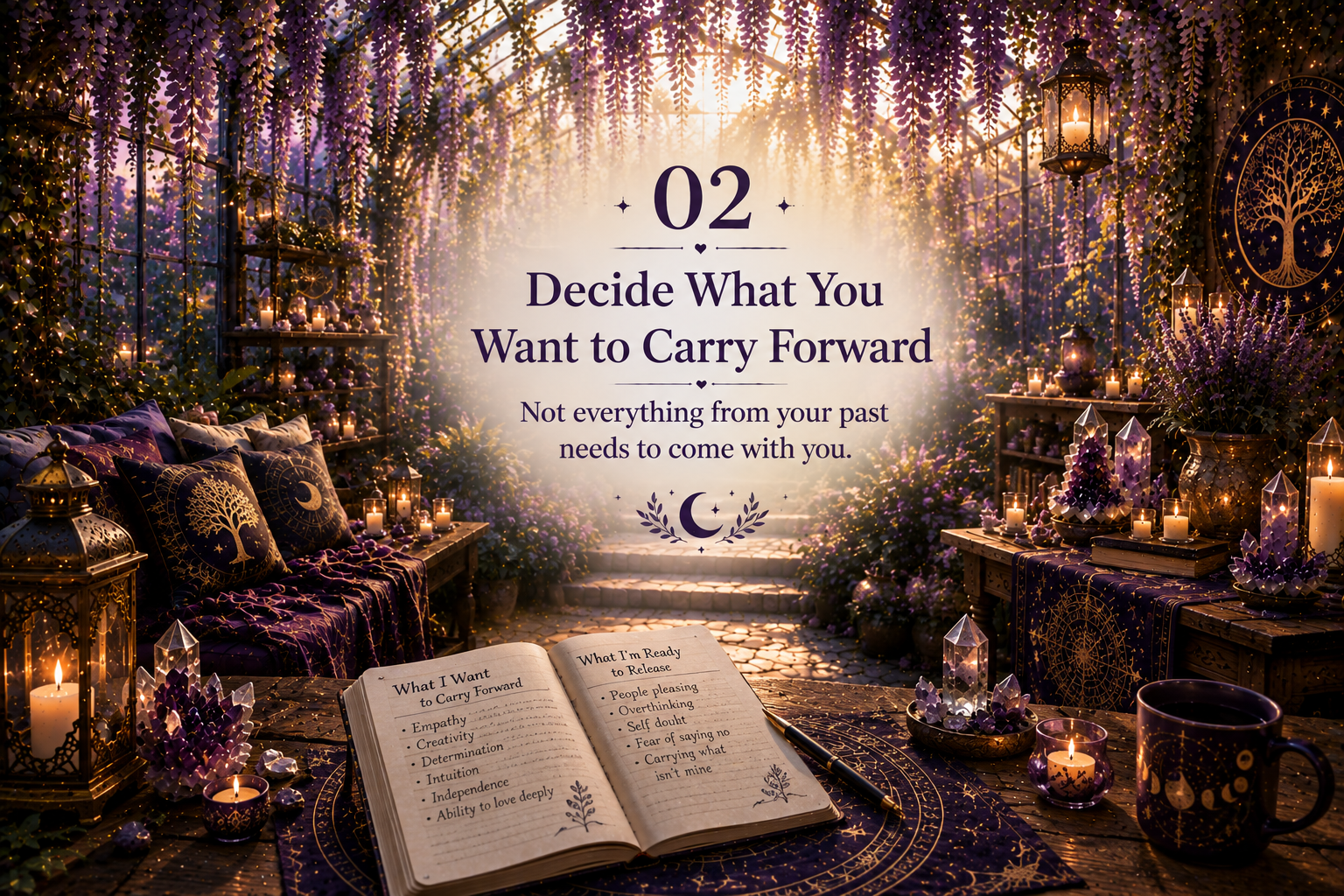
02: Decide What You Want to Carry Forward
Not Everything From Your Past Needs to Come With You
Healing does not require leaving every part of your past behind. Some experiences may have created patterns you are ready to release, but they may have also helped shape qualities you genuinely value in yourself.
Maybe you became deeply empathetic, independent, determined, creative, intuitive, resilient, or capable of loving deeply. You are allowed to keep the parts of yourself that feel true while releasing the beliefs, responsibilities, and survival patterns that no longer belong in your life.
This is not about deciding whether your past was “good” or “bad.” It is about becoming intentional about what gets to continue forward with you.
USE THIS WORKSHEET ✦
Values: Figuring Out What Matters Most
The U.S. Department of Veterans Affairs Whole Health program offers a values exercise designed to help you identify what matters most to you and narrow those values down to the ones you most want guiding your life. It includes qualities such as authenticity, compassion, creativity, freedom, growth, self-respect, connection, and courage.
→ Use the Worksheet
DO THIS NOW ✦
Step 1: Decide What You Want to Keep
Write down five qualities, strengths, beliefs, or parts of yourself that you want to carry forward. These might include empathy, creativity, determination, intuition, independence, resilience, compassion, or your ability to love deeply.
Step 2: Decide What You’re Ready to Release
Write down five things you no longer want guiding your life. This might include people-pleasing, overthinking, self-doubt, fear of saying no, constantly expecting rejection, or carrying responsibility for other people’s feelings.
Step 3: Create Your Carry-Forward List
Finish these two sentences:
“I choose to carry forward...”
“I am ready to release...”
Keep your answers somewhere you can return to as you continue through this path.
BEFORE MOVING ON ✦
Be able to name what from your past still feels like an important part of who you are and what you are ready to stop carrying. Healing does not mean becoming someone completely different. It means becoming more intentional about what gets to come with you.
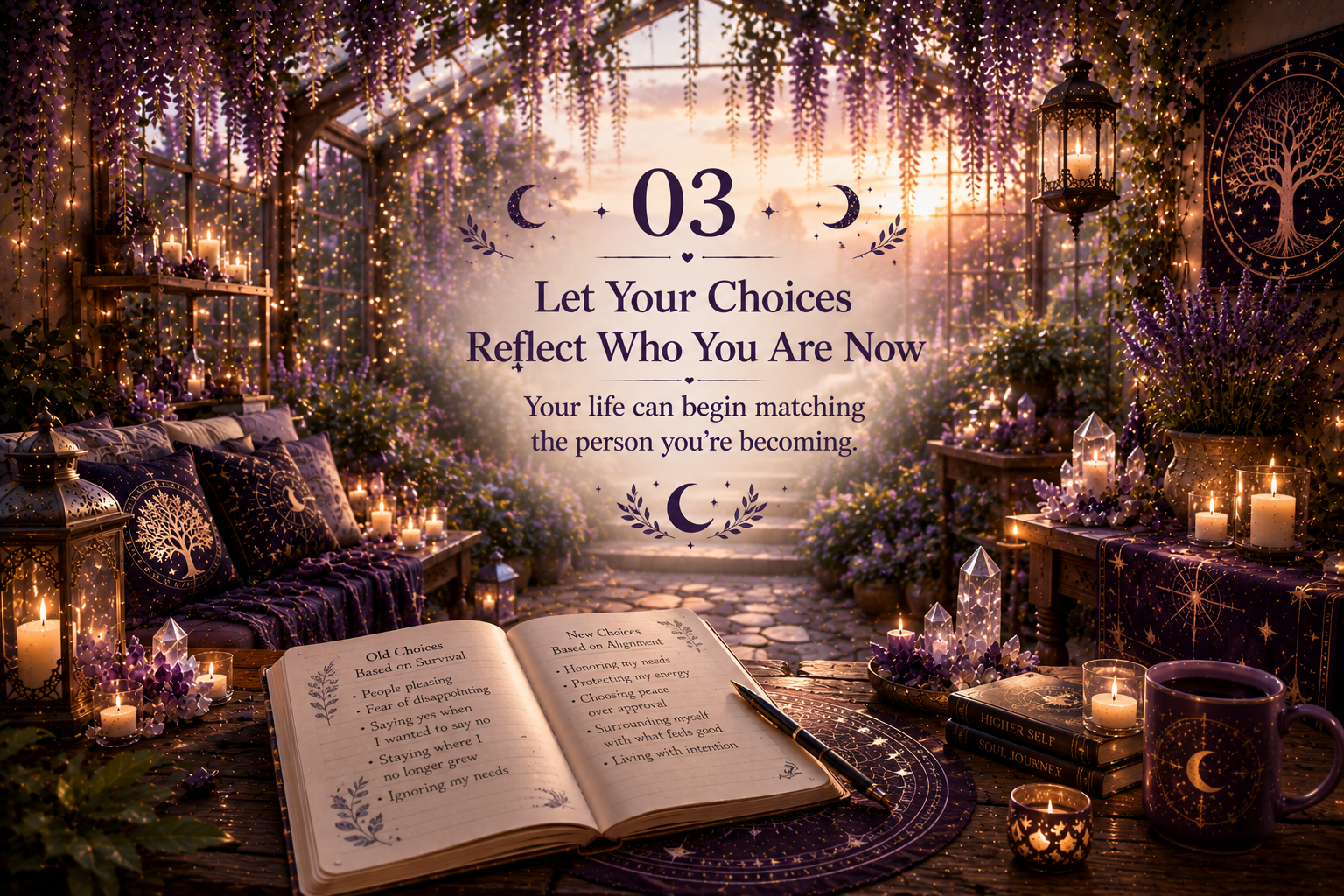
03: Let Your Choices Reflect Who You Are Now
Your Life Can Begin Matching the Person You’re Becoming
Healing can change what you want, what you tolerate, what matters to you, and the way you want to live. Sometimes your circumstances change faster than your habits do, which means you may still find yourself making choices based on an older version of yourself.
You might keep saying yes because you once needed approval, stay quiet because conflict used to feel unsafe, or continue giving your energy to things that no longer match your priorities.
This step is about bringing your everyday choices into alignment with who you are now. You do not need to reinvent your entire life. Small decisions made from your current values can gradually create a life that feels more honest and intentional.
READ THIS ✦
Why You Should Prioritize Meaning in Your Everyday Life
UC Berkeley’s Greater Good Science Center explores how understanding your personal values can help you make everyday choices that feel more meaningful and aligned with what actually matters to you. It also explains how the small things you repeatedly choose can shape the life you create over time.
→ Read the Article
DO THIS NOW ✦
Step 1: Notice an Old Choice
Think of one decision you still make from an old pattern. Maybe you people-please, ignore your needs, stay somewhere out of obligation, avoid something you actually want, or make choices based on fear of disappointing someone.
Step 2: Ask What the Current You Would Choose
Ask yourself: “If I made this decision based on who I am now instead of what I learned to do in the past, what would I choose?”
Write down the first answer that feels honest.
Step 3: Make One Choice From Where You Are Now
Choose one small action that reflects your current values. Protect your time. Speak honestly. Choose peace over approval. Spend time with people who support you. Make room for something you enjoy. Let the choice reflect the life you are creating now.
BEFORE MOVING ON ✦
Be able to identify one choice you have been making from an older version of yourself and practice making that decision from who you are today. Healing begins showing up in your life when your choices start matching the person you are becoming.
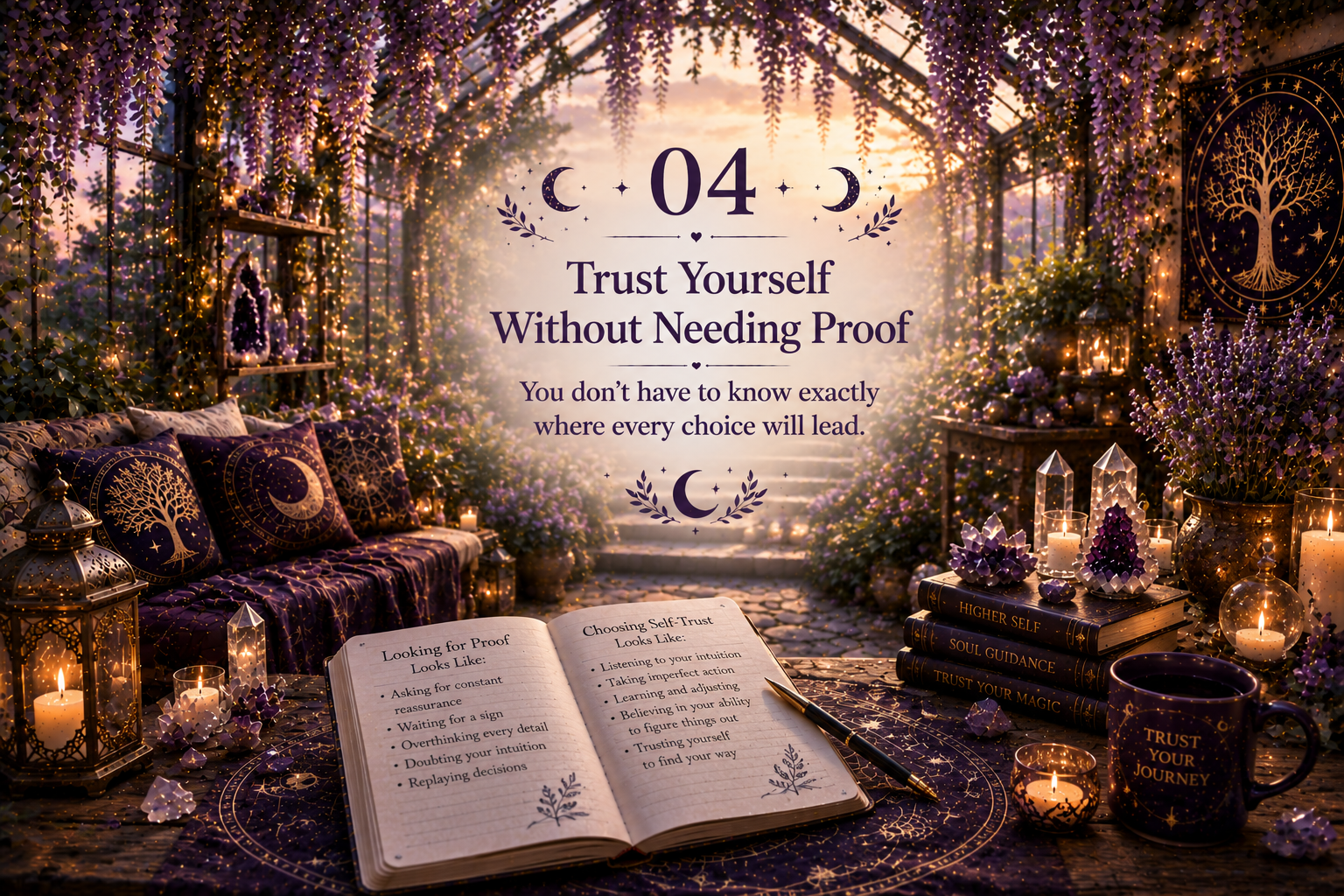
04: Trust Yourself Without Needing Proof
You Don’t Have to Know Exactly Where Every Choice Will Lead
Healing can make you more aware of yourself, but awareness does not always remove uncertainty. You may still wonder whether you are making the right choice, setting the right boundary, trusting the right feeling, or moving in the right direction.
Self-trust is not knowing with certainty that everything will work out exactly as you hope. It is believing that you can make thoughtful choices with the information you have and handle what comes next, even if the outcome is different from what you expected.
You are allowed to gather information, think things through, and ask for support. But eventually, there may not be another sign, answer, or piece of proof that makes the decision completely certain. Sometimes the next step is trusting yourself enough to choose.
READ THIS ✦
What Is Analysis Paralysis?
Cleveland Clinic explains how searching for the perfect answer can sometimes make decision-making harder. It offers practical strategies for building confidence through smaller decisions, recognizing when you have enough information, and reminding yourself that you are capable of handling an outcome even when you cannot predict it perfectly.
→ Read the Article
DO THIS NOW ✦
Step 1: Notice Where You’re Looking for Proof
Think of one decision you have been repeatedly analyzing, researching, asking others about, or waiting for a sign to confirm. Ask yourself: “What am I hoping to know with certainty before I choose?”
Step 2: Separate What You Know From What You Can’t Know
Write down the facts and information you already have. Then separately write down what cannot be guaranteed, such as how someone will react, exactly how the future will unfold, or whether you will ever feel completely certain.
Step 3: Make One Choice You Can Stand Behind
Ask yourself: “Based on what I know now, what choice feels most aligned with my values, needs, and the person I am becoming?”
Make one decision without continuing to search for another layer of reassurance afterward.
BEFORE MOVING ON ✦
Be able to make at least one thoughtful choice without waiting for complete certainty or outside proof that it is the “right” one. Self-trust does not mean you will always know what happens next. It means trusting yourself to respond to whatever comes next.
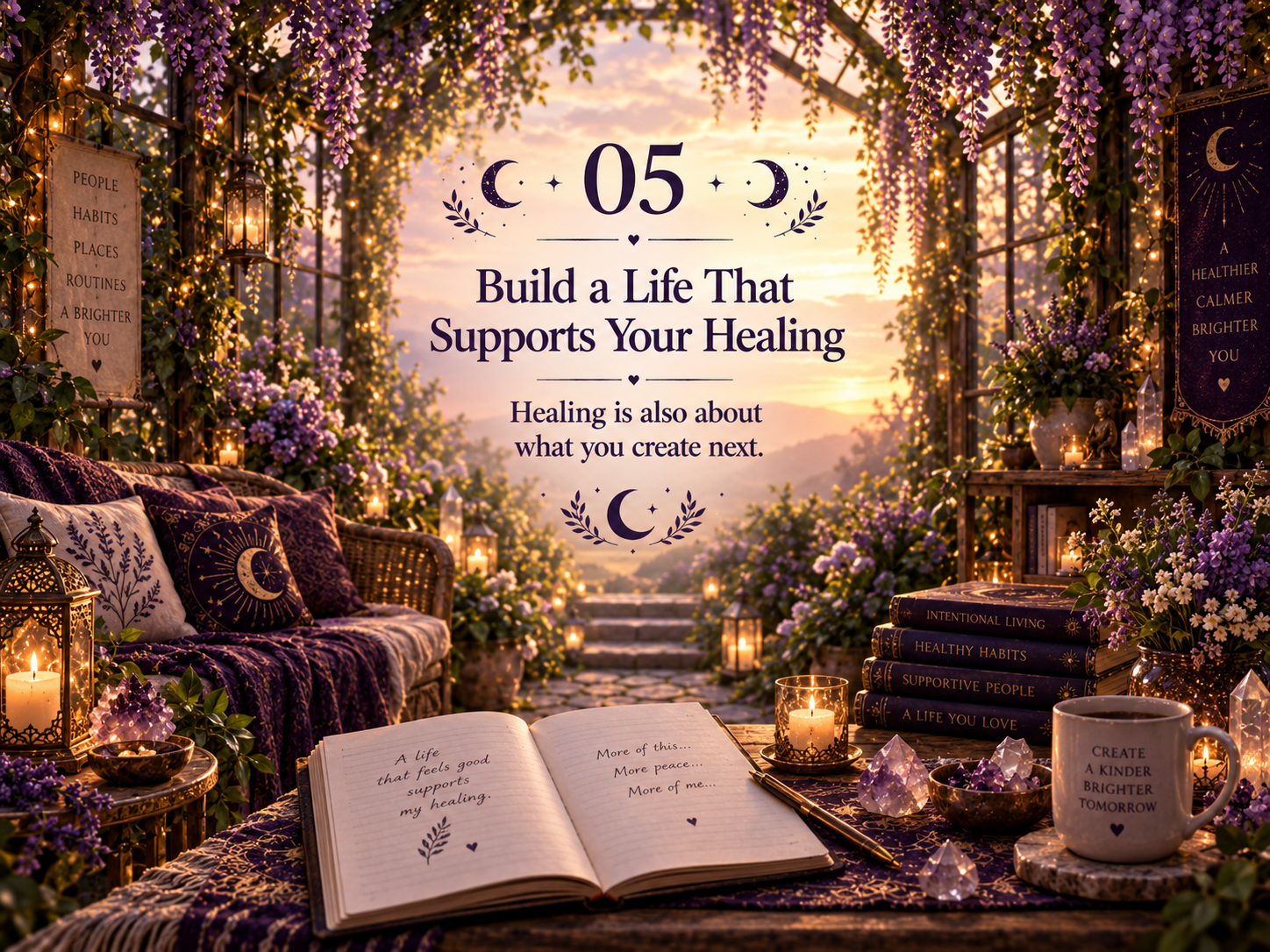
05: Build a Life That Supports Your Healing
Healing Is Also About What You Create Next
Healing is not only about understanding what happened, releasing old patterns, or learning how to respond differently. It is also about creating a life that makes it easier for the healthier version of you to keep growing.
That may mean choosing relationships where you feel respected, creating more peace in your environment, protecting your energy, making time for what matters to you, asking for support, or building routines that help you feel more grounded.
You cannot control everything life brings you. But you can become more intentional about the people, habits, environments, and choices that surround you as you move forward.
READ THIS ✦
Building Your Resilience
The American Psychological Association explains that resilience can be strengthened through connection, wellness, healthy thinking, meaning, and intentional choices. It emphasizes that difficult experiences do not have to determine the outcome of your life and that the resources and habits supporting resilience can be built over time.
→ Read the Article
DO THIS NOW ✦
Step 1: Identify What Helps You Thrive
Write down five things that make you feel more supported, grounded, connected, or like yourself. This might include certain people, quiet time, creativity, movement, nature, spiritual practices, routines, or your physical environment.
Step 2: Notice What Makes Healing Harder
Write down three things that repeatedly pull you away from the life you are trying to create. This could be a relationship, habit, environment, obligation, or pattern that consistently leaves you depleted or disconnected from yourself.
Step 3: Change One Part of Your Environment
Choose one realistic change you can make now. Spend more time with people who support you. Protect part of your week for yourself. Create a calmer home space. Return to something you love. Ask for help. Reduce contact with something that repeatedly pulls you backward.
BEFORE MOVING ON ✦
Be able to name what supports the person you are becoming and make at least one intentional change that creates more room for it. Healing is not only about surviving what happened. It is also about building a life that helps you feel more like yourself.