

01 Understanding Your Sensitivity
Sensitivity Is a Trait, Not Something You Need to Fix
Sensitivity can show up in many different ways. You may notice subtle changes in your environment, feel emotions deeply, absorb the moods of people around you, become overwhelmed by noise or crowds, or need more time alone to reset after a busy day.
The goal is not to become less sensitive. It is to understand how sensitivity works in your own life so you can recognize what affects you, what helps you feel grounded, and what you need in order to feel balanced.
LISTEN TO HOW HIGHLY SENSITIVE PEOPLE THRIVE ✦
How Highly Sensitive People Thrive with Elaine Aron, PhD
Elaine Aron is the psychologist and researcher known for pioneering the study of highly sensitive people. In this episode of Good Life Project, she explains what high sensitivity can look like and how sensitive people can better understand themselves.
→ Listen to the Episode
DO THIS NOW ✦
Step 1: Make Your Sensitivity List
Write down:
3 things that overwhelm you
3 things you notice that others often don’t
3 things that help you feel like yourself again
Step 2: Notice One Moment
Over the next 24 hours, notice one moment when you feel overstimulated, emotionally affected, or drained.
Write down:
What happened
What you felt
What you needed in that moment
Step 3: Look for the Pattern
At the end of the day, look back at what you wrote and notice whether certain environments, people, sounds, situations, or emotions seem to affect you more than others.
02 How Sensitivity Shows Up
The Signs Are Often Subtle at First
Sensitivity does not always look dramatic. Sometimes it shows up as noticing small changes, feeling affected by other people’s moods, becoming overstimulated more quickly, or needing extra time to recover after a lot of noise, activity, or emotional input.
The goal is not to overanalyze every reaction. It is to begin noticing the patterns that show up consistently for you. The more aware you become of those patterns, the easier it is to understand what affects you and what helps you feel like yourself again.
TAKE THE HIGHLY SENSITIVE PERSON SELF-TEST ✦
Are You Highly Sensitive?
This self-test from Elaine Aron’s official HSP site can help you recognize common sensitivity traits and put language to what you may already be experiencing.
→ Take the Self-Test
DO THIS NOW ✦
Step 1: Notice Your Patterns
Over the next 24 hours, pay attention to one moment when you feel overstimulated, emotionally affected, or unusually aware of something around you.
Step 2: Write Down What Happened
Write down:
What was happening
What you noticed
How you felt
What helped or would have helped
Step 3: Name What Shows Up Most
At the end of the day, look back at what you wrote and notice what affected you most.
Was it noise?
Crowds?
Other people’s energy?
Stress?
Too much going on at once?

03 Protecting Your Energy
Boundaries Don’t Make You Less Caring
When you care deeply, setting boundaries can feel uncomfortable. You may worry about disappointing someone, seeming selfish, or letting another person down. But protecting your emotional and energetic space does not mean you care any less. It means you are recognizing that your wellbeing matters too.
Healthy boundaries give you room to notice what you are feeling without immediately reacting to everyone else’s needs. You can listen without fixing, support someone without taking responsibility for their emotions, and say no without needing to justify your worth.
You do not have to close your heart to protect it. You can remain compassionate while becoming more intentional about what you allow into your space.
READ ABOUT GRACEFUL BOUNDARIES ✦
Graceful Boundaries – Part I
In this article, Elaine Aron explains that boundaries are not about becoming cold or shutting people out. They are about learning how to be clear, kind, and honest about what you need so your sensitivity can be protected instead of overwhelmed.
→ Read the Article
DO THIS NOW ✦
Step 1: Notice Where Your Energy Gets Drained
Think about one recent situation where you left feeling emotionally exhausted, overloaded, or resentful.
Write down:
What happened
Who was involved
What felt too heavy
Step 2: Name the Boundary You Needed
Ask yourself:
Did I need more space?
Did I need to say no?
Did I need to stop fixing or overexplaining?
Did I need more time before responding?
Step 3: Choose One Boundary Sentence
Write one simple sentence you could use next time.
Examples:
I can’t take that on right now.
I need some time to think about it.
I’m here for you, but I can’t carry this for you.
I need some quiet time before I respond.
04 Releasing What Isn’t Yours
You Can Care Without Carrying It
Sometimes the hardest part of being sensitive is knowing when to let something go. You may replay someone else’s problems long after the conversation ends, feel guilty when someone is unhappy, or find yourself trying to fix situations that were never yours to solve.
Releasing does not mean becoming detached or uncaring. It means recognizing that other people are allowed to have their own emotions, experiences, choices, and lessons without you carrying them for them.
You can offer compassion without taking on the weight. You can love someone without absorbing their pain. And you can step away from what is not yours without feeling guilty for choosing your own peace.
LEARN THE DIFFERENCE BETWEEN EMPATHY AND EMOTIONAL CONTAGION ✦
Empathy Defined | Greater Good Science Center
UC Berkeley’s Greater Good Science Center explains that empathy can include feeling another person’s emotions, while emotional contagion involves actually “catching” another person’s emotional state. Learning to recognize that difference can help you notice when caring for someone has turned into carrying what they are feeling.
→ Read About Empathy
DO THIS NOW ✦
Step 1: Ask Whose Feeling This Is
The next time your mood suddenly changes around another person, pause and ask:
Was I feeling this before?
Did something happen to me personally?
Could I be reacting to what someone else is feeling?
Step 2: Separate Caring From Responsibility
Choose one situation you have been carrying and write down:
What belongs to me
What belongs to them
What I can actually control
Step 3: Give Yourself Permission to Release It
Finish this sentence:
I can care about this without being responsible for it.
Then choose one small action that brings your attention back to yourself, such as stepping outside, taking a few quiet minutes, journaling, or doing something that helps you reset.
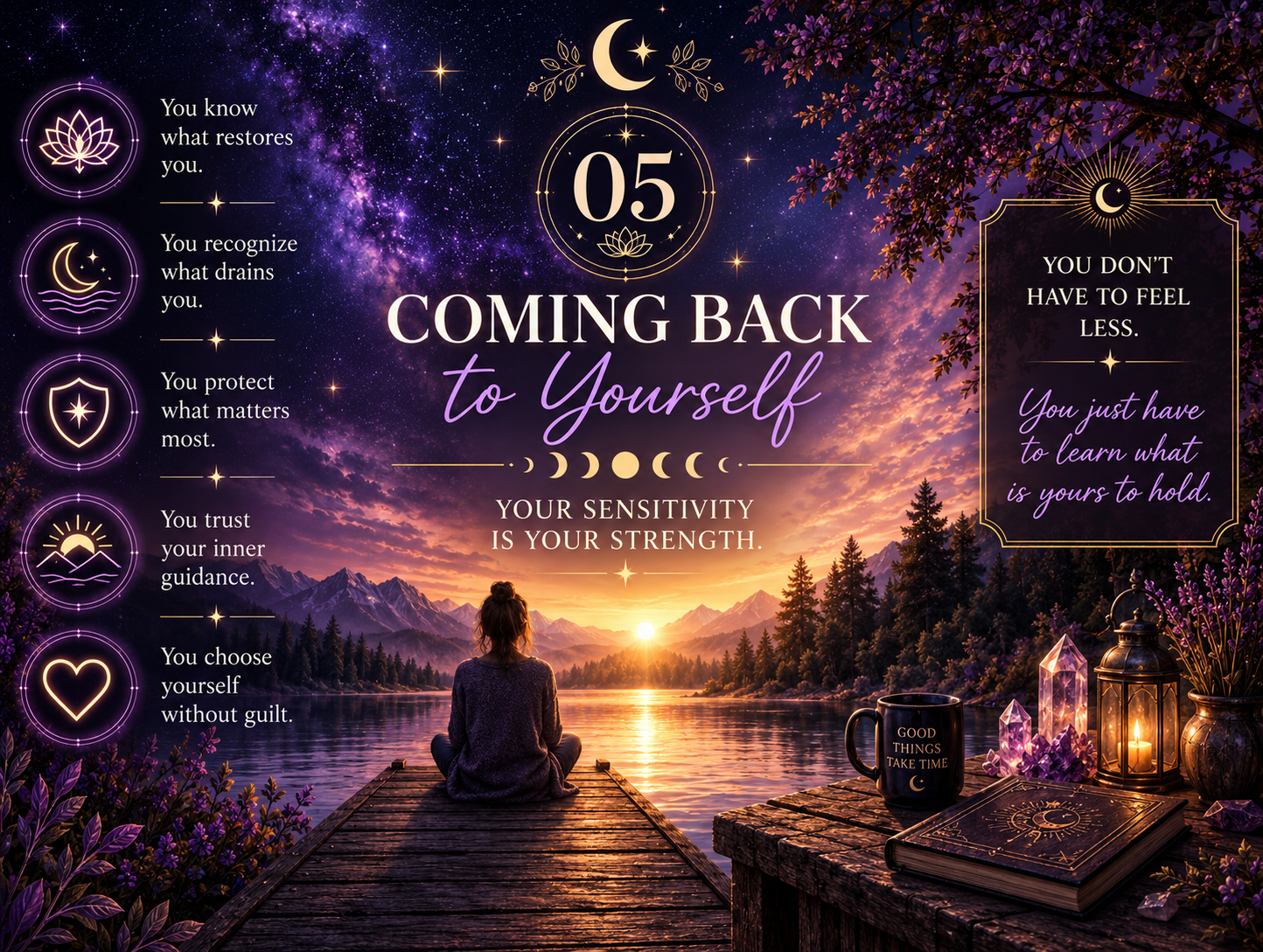
05 Coming Back to Yourself
Your Sensitivity Can Become Your Strength
The more you understand your sensitivity, the less you have to fear it. You begin to notice what drains you, what restores you, which environments feel supportive, and when you need to step back and give yourself space. You become better at recognizing your own emotions before automatically responding to someone else’s.
This does not mean you will never feel overwhelmed again. It means you will have more awareness when you do. You can pause, check in with yourself, create distance when you need it, and choose what deserves your attention instead of reacting to everything you feel.
Your sensitivity is not something you need to outgrow. It can become a deeper relationship with yourself, your intuition, your boundaries, and the world around you.
TRY A SELF-COMPASSION BREAK ✦
General Self-Compassion Break
This guided practice from Kristin Neff is designed to help you meet a current struggle with self-compassion instead of self-criticism.
→ Try the Practice
DO THIS NOW ✦
Step 1: Make Your Return List
Write down:
3 things that restore you
3 things that drain you
1 thing you need more of this week
Step 2: Check In Before You React
The next time you feel overwhelmed, pause and ask:
What am I feeling right now?
What do I need right now?
Is this mine to carry?
Step 3: Choose One Way to Come Back to Yourself
Pick one small action that helps you return to yourself today.
Examples:
Go somewhere quiet
Step outside
Journal for a few minutes
Take a break from other people’s energy
Do something that helps you feel grounded again
06 Your Sensitivity Is Part of Your Story
You Were Never Too Sensitive
For a long time, you may have been made to feel like your sensitivity was something you needed to fix. Maybe you were told you cared too much, felt too deeply, or took things too personally. But sensitivity is not a flaw that needs to be corrected. It is one of the ways you experience and understand the world.
As you learn to recognize your emotions, protect your energy, honor your boundaries, and trust yourself, your sensitivity can become something very different. It can become awareness. Compassion. Discernment. Connection. A deeper understanding of yourself and the people around you.
You do not have to become harder to feel safe. You do not have to become less caring to protect your peace. You simply get to decide how you want to experience your sensitivity and what you choose to do with it.
READ MORE ABOUT THE HIGHLY SENSITIVE PERSON ✦
The Highly Sensitive Person by Elaine Aron, PhD
This official resource introduces high sensitivity as a real trait and offers a deeper understanding of how sensitive people can work with it instead of against it.
→ Learn More About the Book
DO THIS NOW ✦
Step 1: Notice What Has Changed
Write down:
What you understand about your sensitivity now
What you judge yourself for less than before
What you want to keep honoring moving forward
Step 2: Reframe the Story
Finish these sentences:
My sensitivity helps me...
My sensitivity is not...
I am learning to...
Step 3: Choose One Truth to Keep
Pick one sentence that feels true for you now.
Examples:
My sensitivity is part of who I am.
I do not need to be less of myself to belong.
I can protect my peace and still care deeply.
I am learning how to work with my sensitivity, not against it.