
01: Understanding Your Sensitivity
Your Energy Deserves Protection
When you are highly sensitive, the people, places, conversations, and environments around you can affect you deeply. Some experiences may leave you feeling calm and energized, while others leave you drained, tense, overstimulated, or emotionally exhausted.
Protecting your energy begins with noticing those differences. You do not have to become guarded or withdraw from the people you care about. You are simply learning to recognize what supports you, what depletes you, and when your mind and body are telling you that you have reached your limit.
READ THIS ✦
4 Emotional Signs That You Need Stronger Boundaries
Psychology Today explains how feelings like tension, resentment, frustration, and exhaustion can signal that your emotional energy needs more protection. It also encourages paying attention to the situations where stronger limits may be needed.
→ Read the Article
DO THIS NOW ✦
Step 1: Identify Your Energy Shifts
Think about three recent situations that noticeably changed how you felt. Write down where you were, who you were with, and whether you felt more energized, neutral, or drained afterward.
Step 2: Notice the Warning Signs
Write down what happens when your energy starts getting low. Maybe you become irritated, tense, unusually quiet, emotional, mentally foggy, restless, or desperate for time alone.
Step 3: Find One Pattern
Look over what you wrote and identify one person, environment, conversation, or situation that regularly affects your energy. You are not trying to fix it yet. For now, simply recognize the pattern.
BEFORE MOVING ON ✦
Be able to name at least one situation that consistently drains you and one sign that tells you your energy is beginning to run low.
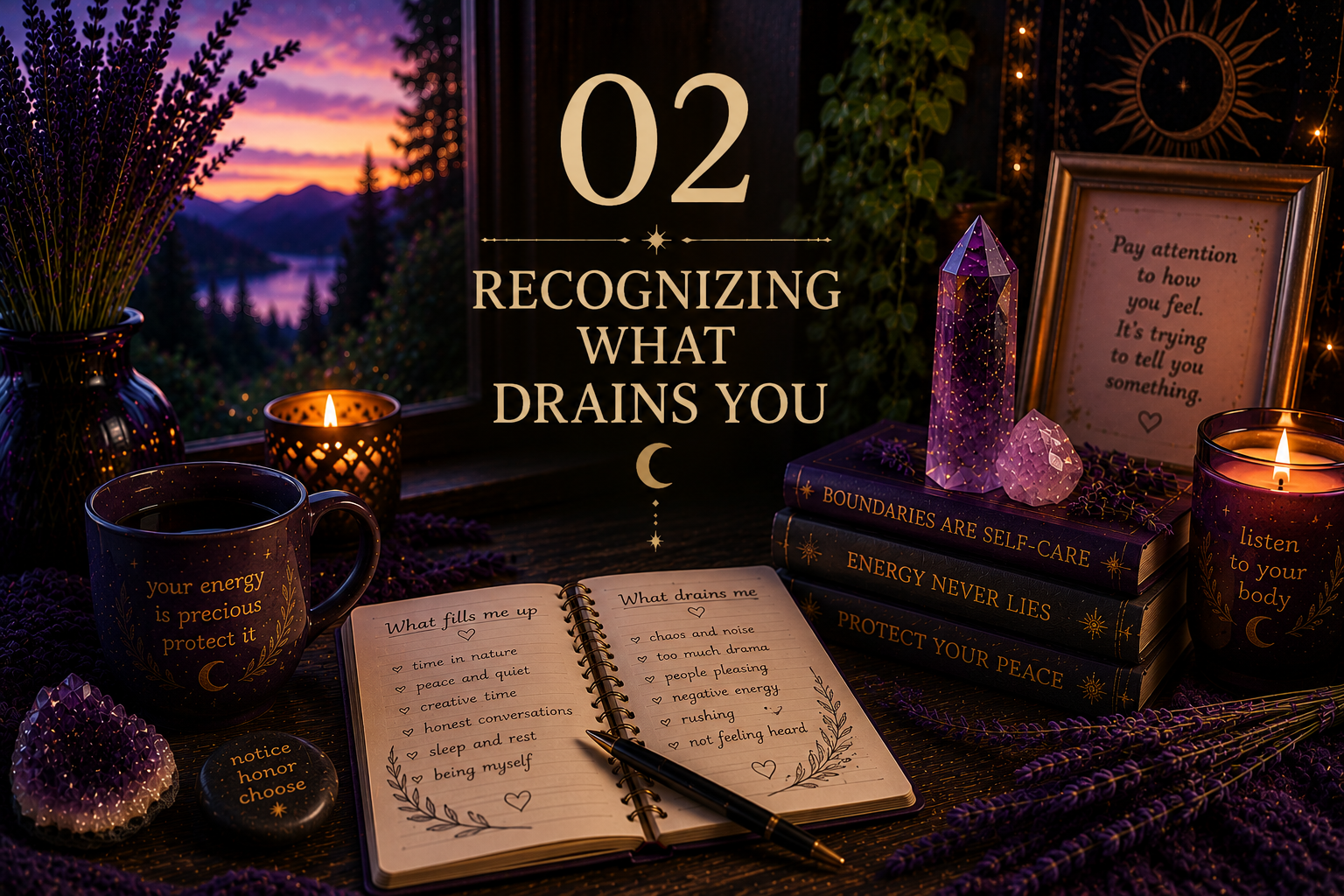
02: Recognizing What Drains You
Pay Attention to What Leaves You Depleted
Not everything that drains you will feel obviously stressful in the moment. Sometimes it shows up afterward as exhaustion, irritability, brain fog, tension, feeling overwhelmed, or suddenly needing to be alone.
The goal is to become more specific about where your energy is going. Certain people, environments, responsibilities, conversations, noise, conflict, or constant demands may require more from you than others. Once you recognize your biggest drains, you can start making choices about how much access they have to your energy.
READ THIS ✦
Stress Symptoms: Effects on Your Body and Behavior
Mayo Clinic explains how stress can show up through your body, emotions, thoughts, and behavior, including fatigue, tension, difficulty concentrating, irritability, feeling overwhelmed, and changes in sleep. Learning to recognize these signals can help you notice when something is taking more out of you than you realized.
→ Read the Article
Mayo Clinic: Stress Symptoms
DO THIS NOW ✦
Step 1: Create Your Drain List
Think about the things you regularly encounter in your life. Write down anything that consistently leaves you feeling tired, tense, overstimulated, irritated, emotionally heavy, or disconnected from yourself.
Step 2: Find Your Biggest Three
Look at your list and choose the three drains that affect you most often. Next to each one, write down how you usually feel afterward.
Step 3: Ask What Could Change
For each of your three biggest drains, ask: Can I reduce this? Can I limit how long I’m exposed to it? Can I prepare differently? Can I give myself recovery time afterward?
You do not have to solve all three right now. Choose one small change you could realistically make.
BEFORE MOVING ON ✦
Know your three biggest energy drains and one small change you can make to reduce the impact of at least one of them.
And yes, I’m tracking the resources from here forward so we do not reuse the same link in another step or section.
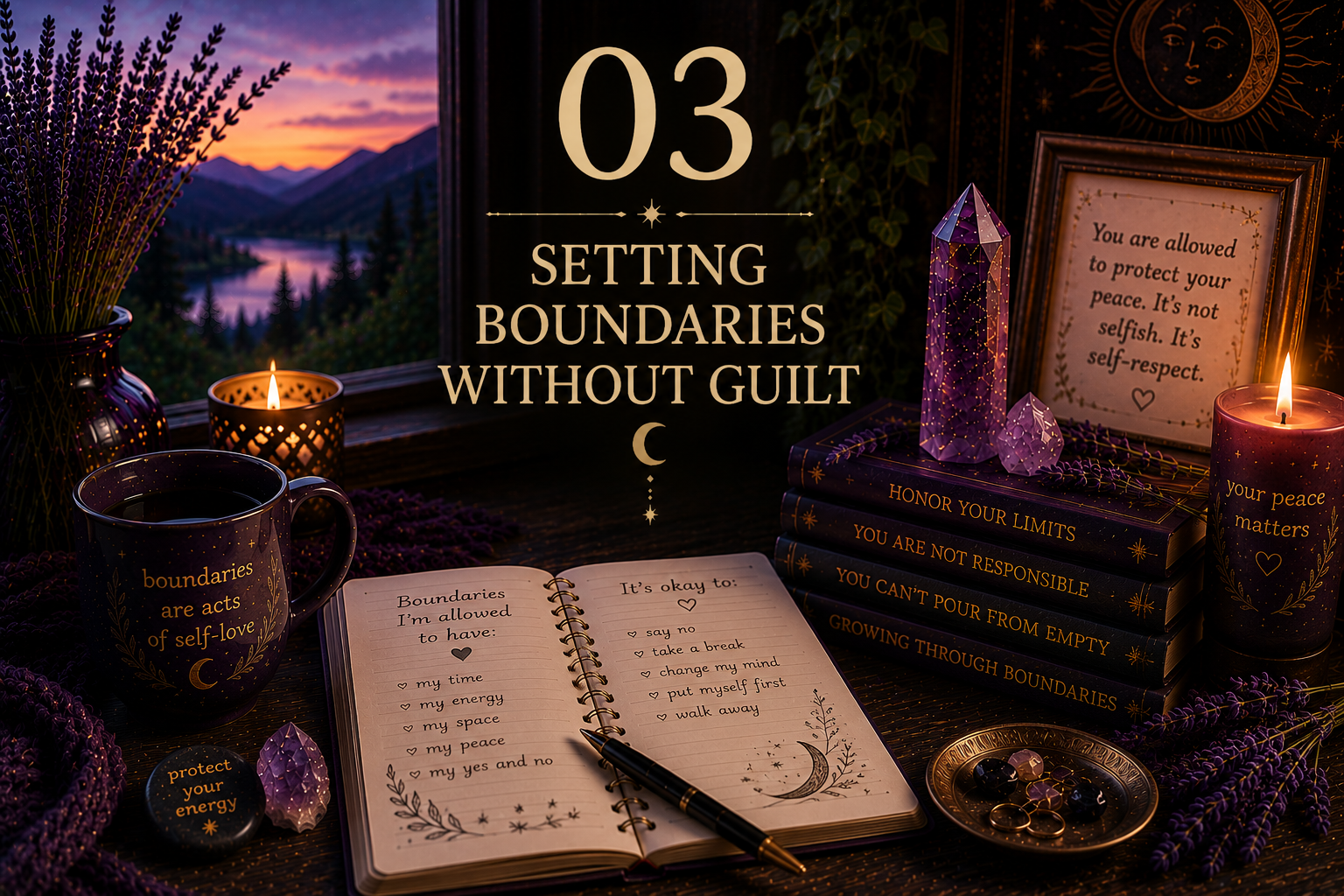
03: Setting Boundaries Without Guilt
Protecting Your Energy Doesn’t Make You Selfish
Setting a boundary can feel uncomfortable, especially if you are used to keeping the peace, helping everyone, or worrying about disappointing people. You may know you need to say no and still feel guilty when you actually do it.
Guilt does not automatically mean you have done something wrong. Sometimes it simply means you are doing something differently. Boundaries help you protect your time, energy, and capacity while still caring about the people around you.
READ THIS ✦
How to Set Boundaries When You’ve Never Been Taught How
UC Berkeley’s Greater Good Science Center explains why boundaries can bring up guilt and offers practical ways to communicate limits without abandoning your own needs.
→ Read the Article
DO THIS NOW ✦
Step 1: Find Where You Say Yes Automatically
Think of one situation where you regularly agree to something even though part of you wants to say no. Write down what you usually agree to and what you are afraid might happen if you set a limit.
Step 2: Write Your Boundary
Turn that situation into one clear sentence. For example: “I’m not available for that tonight.” “I can help for an hour, but I can’t take this over.” “I need some time before I answer.” “I’m not comfortable discussing that.”
Step 3: Practice Without Over-Explaining
Say your boundary out loud a few times. Practice keeping it short instead of building a long explanation to convince someone that your boundary is reasonable.
BEFORE MOVING ON ✦
Have one boundary you are ready to practice and remind yourself: feeling guilty does not mean the boundary is wrong.
04: Protecting Your Peace
You Don’t Have to Be Available to Everyone
Being sensitive can make you especially aware of what other people need. You may notice when someone is struggling before they say anything, feel pulled to help, or worry that stepping back will disappoint someone.
But being caring does not require being constantly available. Protecting your peace means recognizing that your time, attention, and emotional energy belong to you too. You are allowed to pause, take space, respond later, and decide how much of yourself you have available to give.
EXPLORE THIS BOOK ✦
Set Boundaries, Find Peace
By Nedra Glover Tawwab
Licensed therapist Nedra Glover Tawwab offers practical guidance for protecting your time and energy, expressing your needs, saying no, and creating healthier limits in relationships. The book focuses on boundaries as a form of self-care rather than rejection or selfishness.
→ Explore the Book
DO THIS NOW ✦
Step 1: Find Where You’re Too Available
Think about where you feel expected to always answer, help, listen, respond, or show up. Choose one situation where being constantly available regularly costs you your own peace.
Step 2: Decide What Access Looks Like
Choose one limit that would make the situation feel healthier. This could mean not answering immediately, saying no when you need rest, limiting how long a conversation lasts, taking time before committing to something, or stepping away when you feel overwhelmed.
Step 3: Protect the Limit
Practice your new limit at least once this week. Notice whether the urge to explain, apologize, or change your mind appears. You can acknowledge that discomfort without abandoning the boundary you chose.
BEFORE MOVING ON ✦
Know one place in your life where you no longer want to be constantly available and one specific way you will protect your time, energy, or peace there.
05: Knowing When to Step Back
Stepping Away Can Be an Act of Self-Respect
Sometimes protecting your energy means recognizing when you have reached your limit. You may want to keep helping, explaining, fixing, or pushing through, even when everything in you is asking for space.
Stepping back does not mean you do not care. It means recognizing when continuing to give is costing you more than you have available. Sometimes the healthiest choice is to pause, create distance, and give yourself permission to recover before deciding what comes next.
READ THIS ✦
Pouring From an Empty Cup? Three Ways to Refill Emotionally
Harvard Health explains how emotional exhaustion can build when too much is being asked of you and why making time for yourself, saying no to things that deplete you, and stepping away to reset can be important parts of self-care.
→ Read the Article
DO THIS NOW ✦
Step 1: Recognize Your Limit
Think of one situation where you tend to stay involved longer than feels healthy. Ask yourself: What usually tells me I have reached my limit? What happens when I ignore that feeling?
Step 2: Decide What Stepping Back Looks Like
Choose what creating space could realistically look like in that situation. It might mean ending a conversation, declining an invitation, taking a day before responding, leaving an environment, asking someone else to handle something, or temporarily creating more distance.
Step 3: Give Yourself Permission
Write one sentence you can remind yourself of when guilt appears. For example: “I am allowed to protect my peace.” “I do not have to stay until I am completely drained.” “Taking space does not mean I stopped caring.”
BEFORE MOVING ON ✦
Know one situation where stepping back would protect your well-being and what you will do when you recognize that you have reached your limit.
06: Listening to Your Limits
Your Limits Are Worth Listening To
Sometimes your body and emotions tell you that you’ve had enough before your mind is willing to admit it. You may notice tension, irritability, exhaustion, difficulty concentrating, feeling emotionally flooded, or a strong need to get away and be alone.
Those signals are not something you have to push through automatically. Learning your limits means noticing what happens before you reach complete exhaustion and giving yourself permission to respond sooner.
READ THIS ✦
To Reduce the Strain of Overwork, Learn to Listen to Your Body
Harvard Business Review explores how people can become disconnected from physical signs of stress when they continually push themselves to meet expectations. It explains how paying attention to bodily signals can help you recognize strain earlier and make more intentional choices about when to slow down or step back.
→ Read the Article
DO THIS NOW ✦
Step 1: Learn Your “Enough” Signals
Think about what happens when you are approaching your limit. Write down three signals your body or emotions tend to give you, such as tight shoulders, headaches, irritability, exhaustion, becoming unusually quiet, feeling overwhelmed, or wanting to escape.
Step 2: Choose Your Earlier Response
Next to each signal, write down one thing you could do before you become completely depleted. This might mean taking a break, leaving sooner, saying no, asking for help, putting your phone away, or giving yourself time alone.
Step 3: Listen the First Time
This week, when you notice one of your signals, respond to it instead of immediately pushing past it. Pay attention to whether honoring your limit sooner changes how quickly you recover.
BEFORE MOVING ON ✦
Know at least two signals that tell you you’re approaching your limit and what you can do when they appear. Your goal is not to see how much you can tolerate. It is to notice when you have had enough and trust yourself enough to respond.
07: Creating Healthy Distance
Not Every Connection Needs Your Constant Attention
Some relationships can leave you feeling emotionally exhausted even when you care deeply about the person. You may find yourself constantly checking in, worrying about their feelings, anticipating their reactions, or trying to keep the relationship running smoothly.
Healthy distance does not mean ending the relationship or caring less. It means recognizing when you are giving more emotional energy than you can comfortably sustain and allowing yourself to step back without taking responsibility for everything.
READ THIS ✦
Emotional Labor in Relationships: When Love Becomes Work
Psychology Today explains how carrying too much of the emotional work in a relationship can lead to exhaustion, resentment, and disconnection. It also explores why stepping back from constantly managing another person’s needs can be an important part of creating healthier relationships.
→ Read the Article
DO THIS NOW ✦
Step 1: Notice Where You’re Over-Involved
Think of one relationship where you regularly feel responsible for checking in, fixing problems, managing emotions, keeping the peace, or making sure the other person is okay.
Step 2: Decide What You Can Stop Carrying
Ask yourself: What am I doing because I genuinely want to, and what am I doing because I feel responsible, guilty, or afraid of what will happen if I stop? Choose one responsibility that does not actually belong to you.
Step 3: Create a Little Space
Practice stepping back from that responsibility this week. This might mean waiting before responding, letting someone solve their own problem, not checking in automatically, spending less time in draining conversations, or giving yourself an evening without contact.
BEFORE MOVING ON ✦
Be able to identify one relationship where you need healthier distance and one emotional responsibility you are ready to stop carrying.
08: Letting Go of Responsibility
You Are Not Responsible for Everyone’s Feelings
When you care deeply about other people, it can be easy to feel responsible for keeping them happy, preventing disappointment, fixing problems, or making sure no one is upset with you.
But another person’s feelings, choices, and reactions are not yours to manage. You can be compassionate without taking ownership of emotions that belong to someone else. Letting go of that responsibility creates more room for your own needs, choices, and peace.
READ THIS ✦
Signs You’re a People-Pleaser and How To Stop
Cleveland Clinic explains how constantly putting other people’s happiness and needs before your own can lead to stress, resentment, and exhaustion. It also offers practical ways to stop taking unnecessary responsibility for keeping everyone else happy.
→ Read the Article
DO THIS NOW ✦
Step 1: Notice What You’re Taking Responsibility For
Think of one person or situation where you regularly feel responsible for someone else’s mood, reaction, disappointment, or problem. Write down exactly what you feel responsible for.
Step 2: Separate What’s Yours From Theirs
Ask yourself: What part of this actually belongs to me? Your part might be communicating clearly, being respectful, making your own choice, or honoring a commitment. Their part includes how they feel about it, how they respond, and what they choose to do next.
Step 3: Release One Responsibility
Choose one thing you are ready to stop managing for someone else. When you notice yourself taking it back on, remind yourself: “I can care about how they feel without making their feelings my responsibility.”
BEFORE MOVING ON ✦
Be able to identify one emotional responsibility you have been carrying for someone else and clearly name what actually belongs to you instead.
09: Protecting Your Energy With Intention
You Get to Choose What You Carry Forward
Protecting your energy isn’t something you have to master overnight. It is a practice of becoming more aware of what affects you and making small, intentional choices about how you respond.
You may not always be able to control the people around you, the situations you encounter, or the emotions you feel. But you can become more intentional about what gets your attention, what you take responsibility for, what you allow access to you, and when you choose to step away.
READ THIS ✦
Mindfulness Practices to Reduce Stress and Improve Focus
Harvard Health explains how learning to direct your attention more intentionally can help you respond to stressful situations instead of automatically reacting to them. It also offers simple mindfulness practices for becoming more aware of what is happening within and around you.
→ Read the Article
DO THIS NOW ✦
Step 1: Choose What You Want to Carry Forward
Look back at what you have learned in this step. Write down three things you want to keep practicing, such as honoring your limits, creating healthy distance, saying no without guilt, or letting other people manage their own feelings.
Step 2: Choose What You Want to Leave Behind
Write down one habit you are ready to work on releasing. This might be over-explaining, automatically saying yes, staying until you are drained, constantly checking on someone, or taking responsibility for another person’s emotions.
Step 3: Create Your Energy Rule
Finish this sentence: “From now on, protecting my energy means...” Keep your answer somewhere you can return to when old habits start pulling you back in.
BEFORE MOVING ON ✦
You do not have to protect yourself perfectly. You are learning to notice sooner, choose more intentionally, and remember that your time, attention, peace, and energy are yours to care for.