
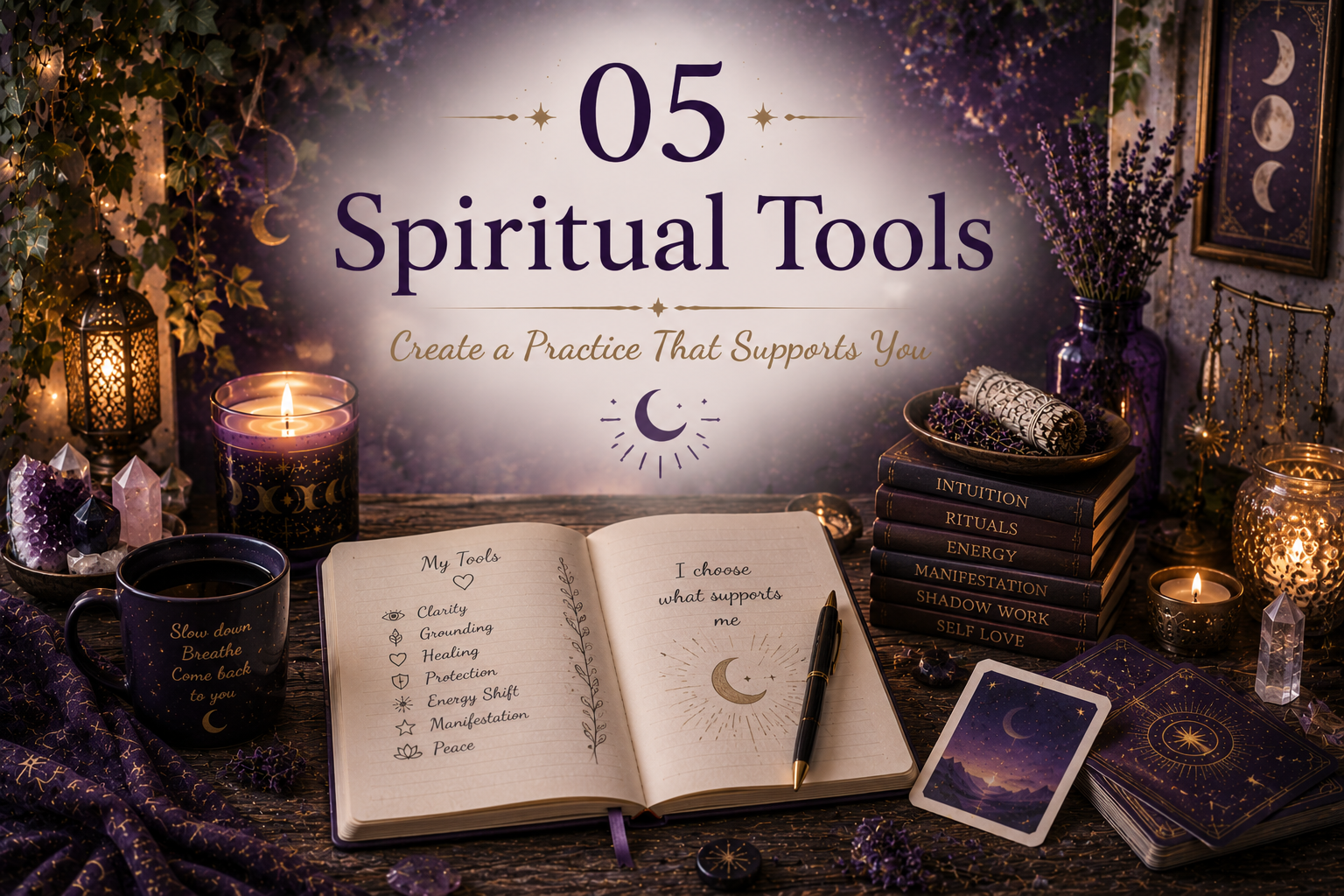

01: Check In With Yourself
Your Needs Come Before Your Routine
A spiritual practice is meant to support you, not override what you actually need. Some days you may feel drawn to tarot, meditation, journaling, or ritual. Other days what you truly need might be rest, quiet, movement, connection, time outside, or simply a break.
Checking in with yourself before automatically following your routine helps you respond to who you are today. Your practice can change depending on your energy, emotions, and needs. You do not have to force yourself through something just because it is what you normally do.
READ THIS ✦
What Is Self-Love and How To Practice It
Cleveland Clinic discusses the importance of regularly checking in with yourself, identifying what you need in the moment, and choosing actions that genuinely support you instead of relying on the same response every day.
→ Read the Article
DO THIS NOW ✦
Step 1: Pause Before Your Practice
Before reaching for a spiritual tool, take one minute and ask yourself: How am I feeling? What is my energy like right now?
Step 2: Ask What You Actually Need
Ask yourself: What do I need today? What would support me right now? Your answer might be meditation, tarot, journaling, rest, movement, connection, quiet, or something completely different.
Step 3: Choose From There
Let your answer guide what you do next. If your usual practice feels supportive, use it. If something else feels more appropriate, choose that instead. If what you need is rest, let rest be enough.
BEFORE MOVING ON ✦
Practice checking in with yourself before automatically following your routine. Your spiritual practice should respond to your needs, not become another obligation you have to satisfy.

02: Choose What Supports You
Match the Tool to the Moment
Different moments may call for different kinds of support. A tarot reading might help when you want perspective. Journaling may help you untangle your thoughts. Meditation might be better when your mind feels overstimulated. Time in nature, music, movement, breathwork, or simply resting may be what you need another day.
There is no single spiritual tool that has to work for every situation. Learning to choose intentionally means asking what you actually need before automatically reaching for the same practice.
Your toolkit becomes more useful when you see it as a collection of options rather than a routine you have to follow.
READ THE RESEARCH ✦
Regulatory Flexibility: An Individual Differences Perspective on Coping and Emotion Regulation
Research from Columbia University explores the idea of “regulatory flexibility,” which means being able to recognize what a situation calls for, choose from different strategies, and adjust based on whether the approach is actually helping. The research supports the idea that no single strategy works best in every situation.
→ Read the Research
DO THIS NOW ✦
Step 1: Name What You Need
Before choosing a spiritual practice, ask yourself: What do I need right now? Your answer might be clarity, grounding, emotional release, protection, inspiration, connection, rest, or joy.
Step 2: Match the Tool to the Need
Choose a practice that seems to support that need. For example, journaling might support clarity, meditation or breathing might help with grounding, tarot might offer reflection, music or movement might help release emotion, and nature might help you reset.
Step 3: Check Whether It Helped
Afterward, ask yourself: Did this actually support what I needed? If not, try something different. The goal is not to force a tool to work. It is to learn which practices tend to support you in different moments.
BEFORE MOVING ON ✦
Be able to identify at least three different needs you experience and one practice or tool that tends to support each one. Your toolkit should give you choices, not rules.
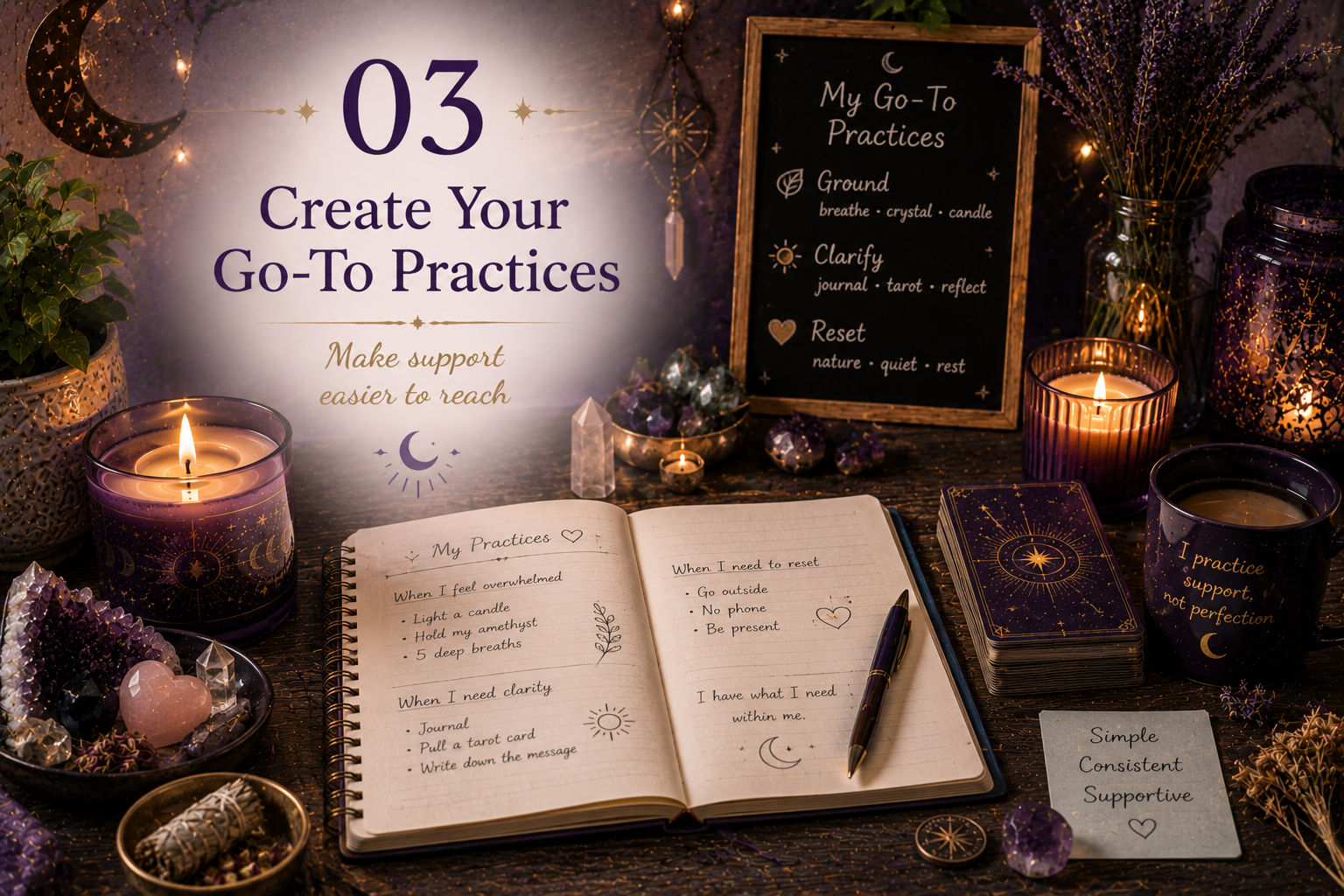
03: Create Your Go-To Practices
Make Support Easier to Reach
When you are overwhelmed, tired, confused, or emotionally drained, it can be harder to decide what would actually help. That is why it can be useful to create a few simple practices you already know you can return to.
Your go-to practices are not rules or another routine you have to maintain. Think of them as familiar options for different moments. You might have one practice that helps you feel grounded, another that helps you find clarity, and another that helps you reset.
The more familiar these practices become, the easier it is to reach for something supportive when you actually need it.
USE THIS WORKSHEET ✦
My Self-Care Plan
The University of Michigan’s Well-Being Collective offers a simple planning tool for identifying small, realistic ways to support yourself, including practices you can use during everyday life and when you feel overwhelmed. It fits this step especially well because the goal is to decide what helps before you are already having a difficult moment.
→ Use the Worksheet
DO THIS NOW ✦
Step 1: Choose Three Needs
Pick three situations you experience regularly. For example: when I feel overwhelmed, when I need clarity, and when I need to reset.
Step 2: Give Each One a Go-To Practice
Choose one or two simple practices for each situation. Maybe grounding means three slow breaths, holding a crystal, and lighting a candle. Clarity might mean journaling or pulling one tarot card. Resetting might mean going outside, putting your phone away, or sitting quietly for ten minutes.
Step 3: Put Your List Somewhere Easy to Find
Create a short “My Go-To Practices” list in your journal or phone. Keep it simple enough that you can look at it and immediately know what your options are when you need support.
BEFORE MOVING ON ✦
Have at least three go-to practices you already know how to use and know which kind of moment each one supports. The goal is to make support easier to reach, not give yourself more things to remember.
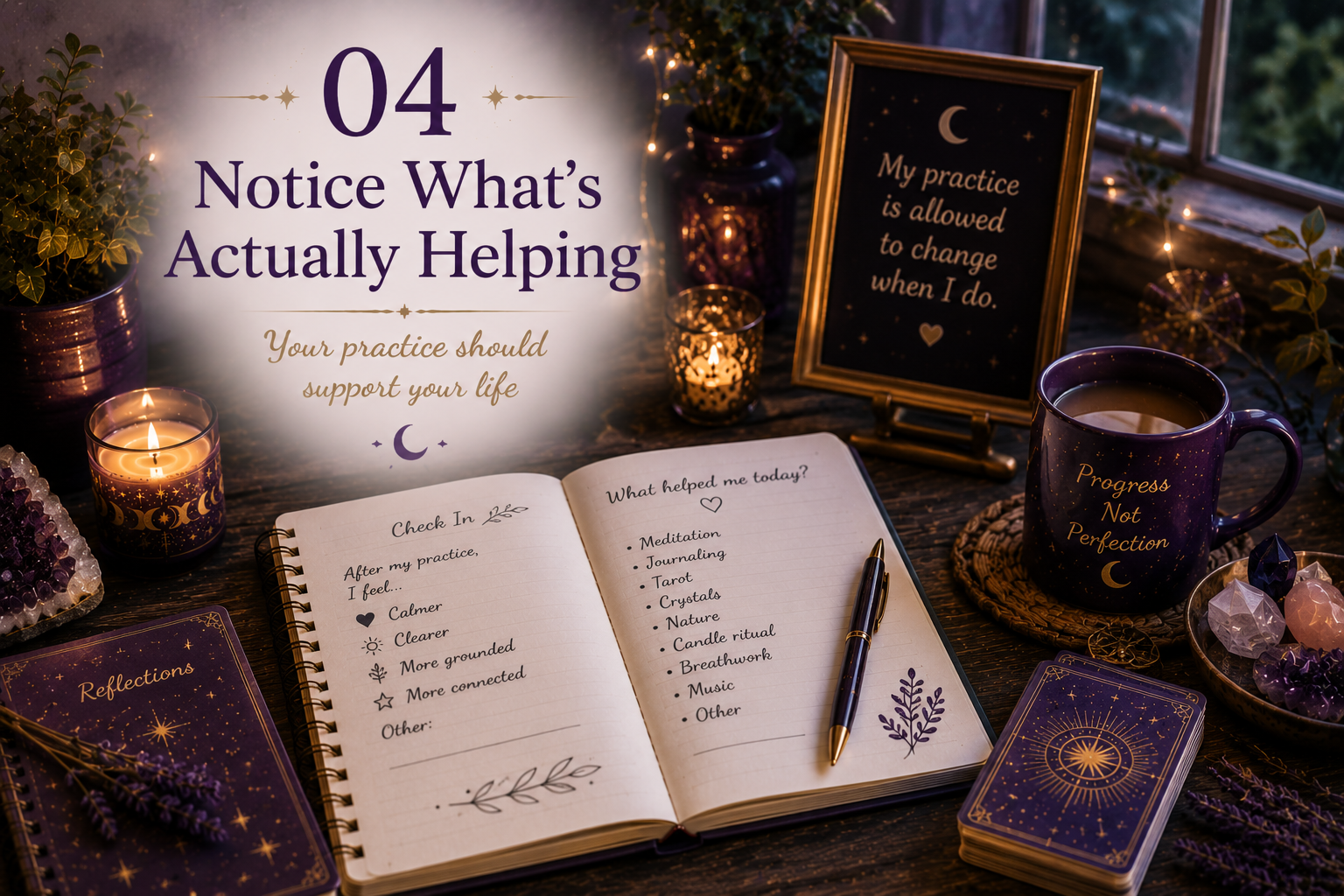
03: Create Your Go-To Practices
Make Support Easier to Reach
When you are overwhelmed, tired, confused, or emotionally drained, it can be harder to decide what would actually help. That is why it can be useful to create a few simple practices you already know you can return to.
Your go-to practices are not rules or another routine you have to maintain. Think of them as familiar options for different moments. You might have one practice that helps you feel grounded, another that helps you find clarity, and another that helps you reset.
The more familiar these practices become, the easier it is to reach for something supportive when you actually need it.
USE THIS WORKSHEET ✦
My Self-Care Plan
The University of Michigan’s Well-Being Collective offers a simple planning tool for identifying small, realistic ways to support yourself, including practices you can use during everyday life and when you feel overwhelmed. It fits this step especially well because the goal is to decide what helps before you are already having a difficult moment.
→ Use the Worksheet
DO THIS NOW ✦
Step 1: Choose Three Needs
Pick three situations you experience regularly. For example: when I feel overwhelmed, when I need clarity, and when I need to reset.
Step 2: Give Each One a Go-To Practice
Choose one or two simple practices for each situation. Maybe grounding means three slow breaths, holding a crystal, and lighting a candle. Clarity might mean journaling or pulling one tarot card. Resetting might mean going outside, putting your phone away, or sitting quietly for ten minutes.
Step 3: Put Your List Somewhere Easy to Find
Create a short “My Go-To Practices” list in your journal or phone. Keep it simple enough that you can look at it and immediately know what your options are when you need support.
BEFORE MOVING ON ✦
Have at least three go-to practices you already know how to use and know which kind of moment each one supports. The goal is to make support easier to reach, not give yourself more things to remember.
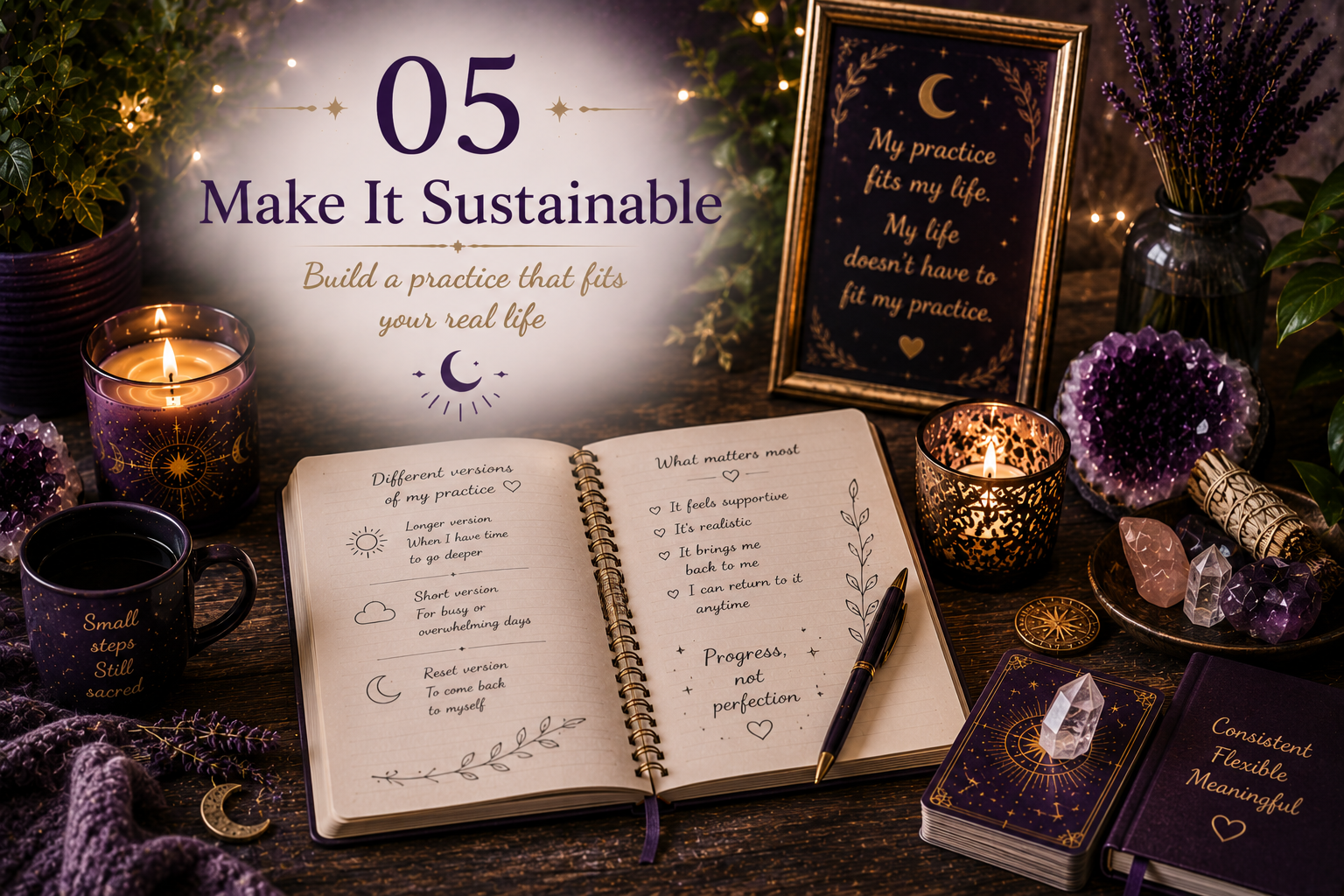
05: Make It Sustainable
Build a Practice That Fits Your Real Life
A spiritual practice should support your life, not compete with it. Some days you may have time for a longer ritual, reading, or meditation. Other days you may only have a few quiet minutes.
Sustainability means creating different versions of your practice so you can stay connected without expecting yourself to show up the same way every day. A five-minute practice still counts. Taking a break when you genuinely need one still counts too.
The goal is consistency without rigidity. Your practice should be flexible enough to grow with your schedule, energy, responsibilities, and changing needs.
LISTEN TO THIS ✦
Building Habits: The Key to Lasting Behavior Change
Stanford behavior scientist BJ Fogg explains why lasting habits work better when they are simple, enjoyable, and easy to fit into your life. His approach focuses on making behaviors small enough to continue even when motivation or available time changes.
→ Listen to the Episode
DO THIS NOW ✦
Step 1: Create Three Versions of Your Practice
Choose one practice you want to maintain and create three versions of it. Your longer version might be a 20-minute ritual or meditation. Your short version might take five minutes. Your reset version might simply be one deep breath, one journal sentence, or one quiet moment.
Step 2: Decide What Matters Most
Ask yourself: What part of this practice actually makes it meaningful to me? Keep that part at the center and let everything else remain flexible.
Step 3: Practice Choosing Instead of Quitting
The next time you are busy, tired, or unmotivated, choose the version that fits the day instead of assuming you have to skip your practice completely.
BEFORE MOVING ON ✦
Have a spiritual practice that can expand when you have more time and simplify when you do not. Progress matters more than perfection. Your practice should fit your life. Your life does not have to fit your practice.