
01 What Intuition Actually Is
You’ve Probably Been Using It Longer Than You Realize
Intuition is that quiet sense of knowing that can appear before you have fully thought something through. It may show up as a sudden thought, a feeling in your body, a strong sense of yes or no, a hesitation, or simply the feeling that something is right for you.
The goal is not to treat every feeling as a message. It is to begin noticing what arises naturally before fear, overthinking, or outside opinions take over. The more familiar you become with your own inner signals, the easier it becomes to recognize how intuition speaks to you.
LEARN WHAT PSYCHOLOGISTS MEAN BY INTUITION ✦
APA Dictionary of Psychology: Intuition
The American Psychological Association defines intuition as immediate insight or perception that happens without conscious reasoning or reflection. It is a simple starting point for understanding that intuition can be part of normal human thinking, not something you have to force or manufacture.
→ Read the Definition
DO THIS NOW ✦
Step 1: Catch Your First Response
Think of one small decision you need to make today.
Before analyzing it, ask yourself:
What was my very first reaction?
Did I feel pulled toward one choice?
Did anything feel uncomfortable, calm, clear, or uncertain?
Step 2: Write It Down
Record your first response before you start reasoning through the decision.
Do not judge it or try to prove whether it is right.
Step 3: Compare It Later
After you make the decision, come back to what you wrote.
Notice whether that first response matched what you eventually discovered.
The goal is simply to begin recognizing your own patterns.
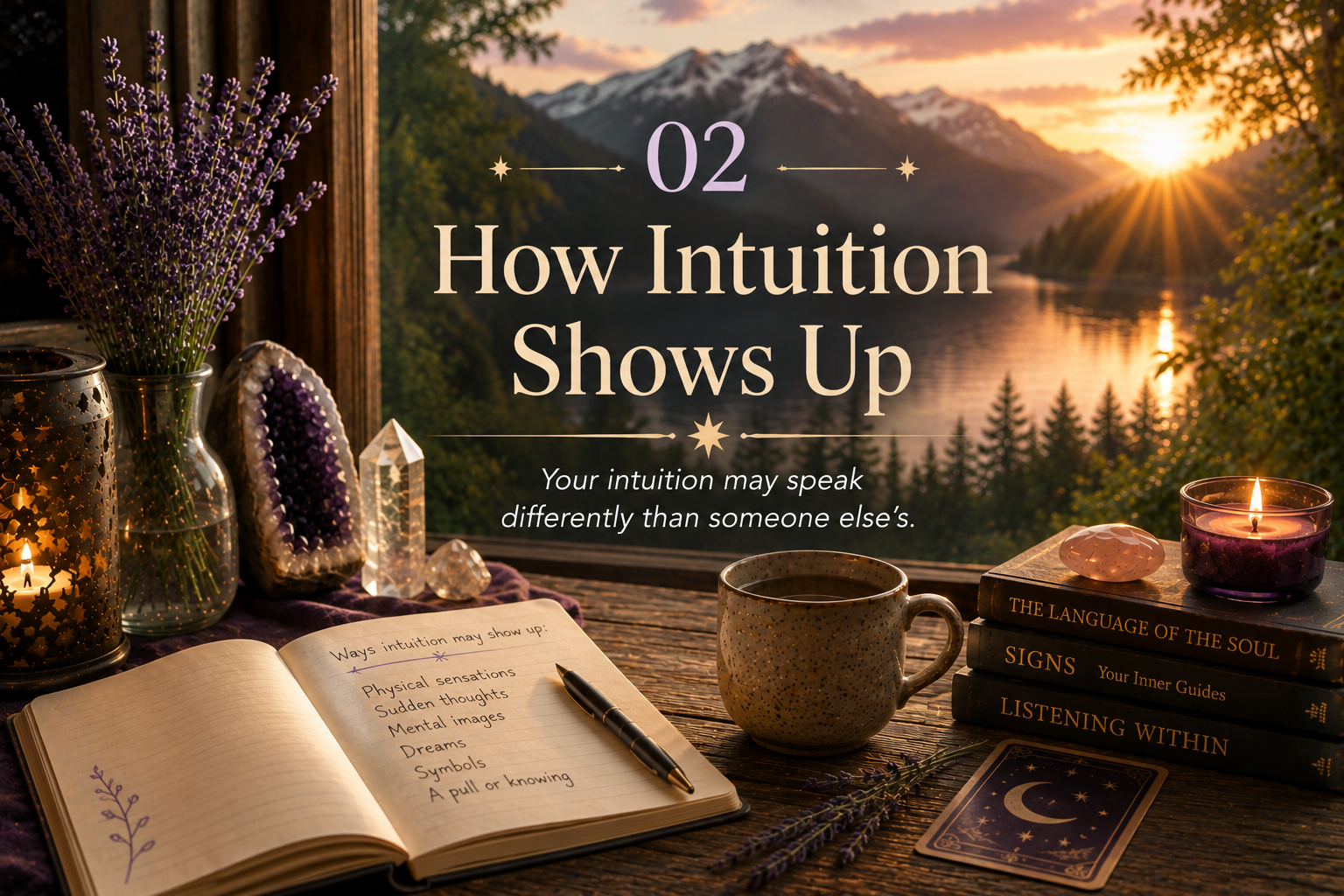
02 How Intuition Shows Up
Your Intuition May Speak in More Than One Way
Intuition does not always arrive as a dramatic gut feeling. Sometimes it is much quieter. You may suddenly know what you want before you can explain why, feel drawn toward or away from something, notice tension or ease in your body, have a thought appear unexpectedly, or recognize a pattern before you consciously understand it.
Your signals may also change depending on the situation. One decision may come with a physical feeling while another arrives as a simple thought or sense of certainty.
The goal is not to treat every feeling as intuition. It is to start noticing how your own first signals tend to appear so you can recognize them more easily over time.
READ THIS ✦
Intuition: What It Is and How It Works
Psychology Today explores intuition as a fast, largely automatic form of processing that can draw from experience and information without requiring conscious, step-by-step reasoning.
→ Read the Article
DO THIS NOW ✦
Step 1: Remember Three Moments
Think of three times you felt like you “just knew” something before you could explain it.
Step 2: Notice How It Arrived
For each one, write down whether it showed up as:
A thought
A body sensation
A feeling of yes or no
An image or idea
A pull toward or away from something
Step 3: Look for Your Pattern
Do not decide whether every signal was right or wrong yet. Simply notice whether your intuition seems to have a familiar way of getting your attention.
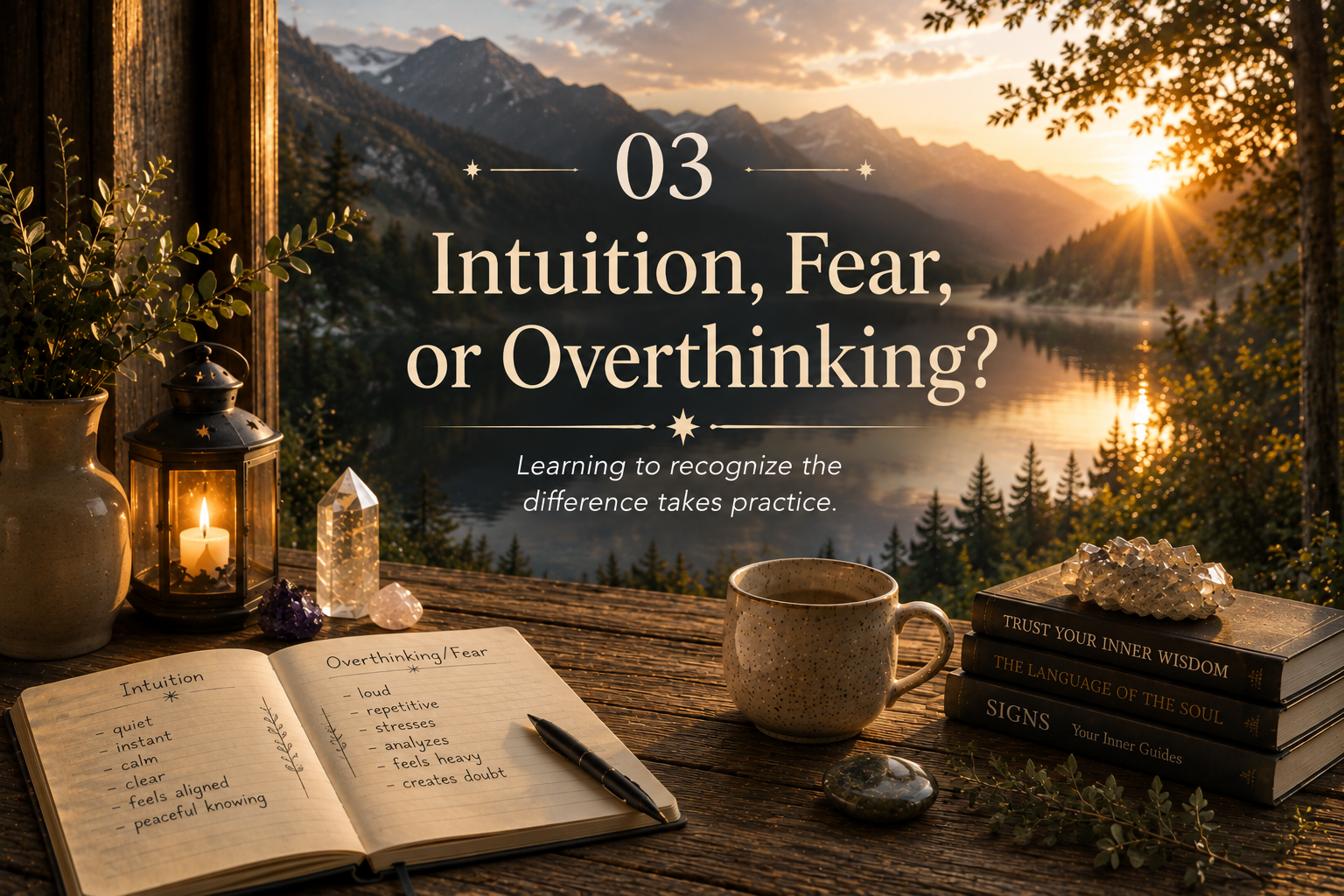
03 Intuition, Fear or Overthinking?
Not Every Strong Feeling Is Intuition
One of the hardest parts of learning to trust yourself is figuring out what you are actually hearing. Intuition, fear, anxiety, past experiences, and overthinking can all influence the way a decision feels.
Intuition often arrives quickly and simply, without needing to build an argument. Fear and overthinking are more likely to keep adding questions, possibilities, worst-case scenarios, or reasons you need certainty before moving forward.
There is no perfect formula for separating them every time. Instead of asking, “Is this definitely intuition?” begin asking what happens to the signal when you slow down. Does it remain simple and steady, or does it grow into a loop of increasingly anxious thoughts?
READ THIS ✦
Is It Intuition, or Is It Anxiety?
This Psychology Today article examines how intuition and anxiety can both feel physical while describing several ways their patterns may differ, including urgency, repetition, and how they affect your sense of possibility.
→ Read the Article
DO THIS NOW ✦
Step 1: Choose One Current Question
Think of something you have been second-guessing.
Step 2: Write the First Signal
Before analyzing it again, write down the very first response you remember having.
Step 3: Separate the Signal From the Story
Underneath it, write everything your mind added afterward.
Then compare them.
What was simple?
What became repetitive?
What sounded like fear of being wrong?
What remained even after you became calmer?
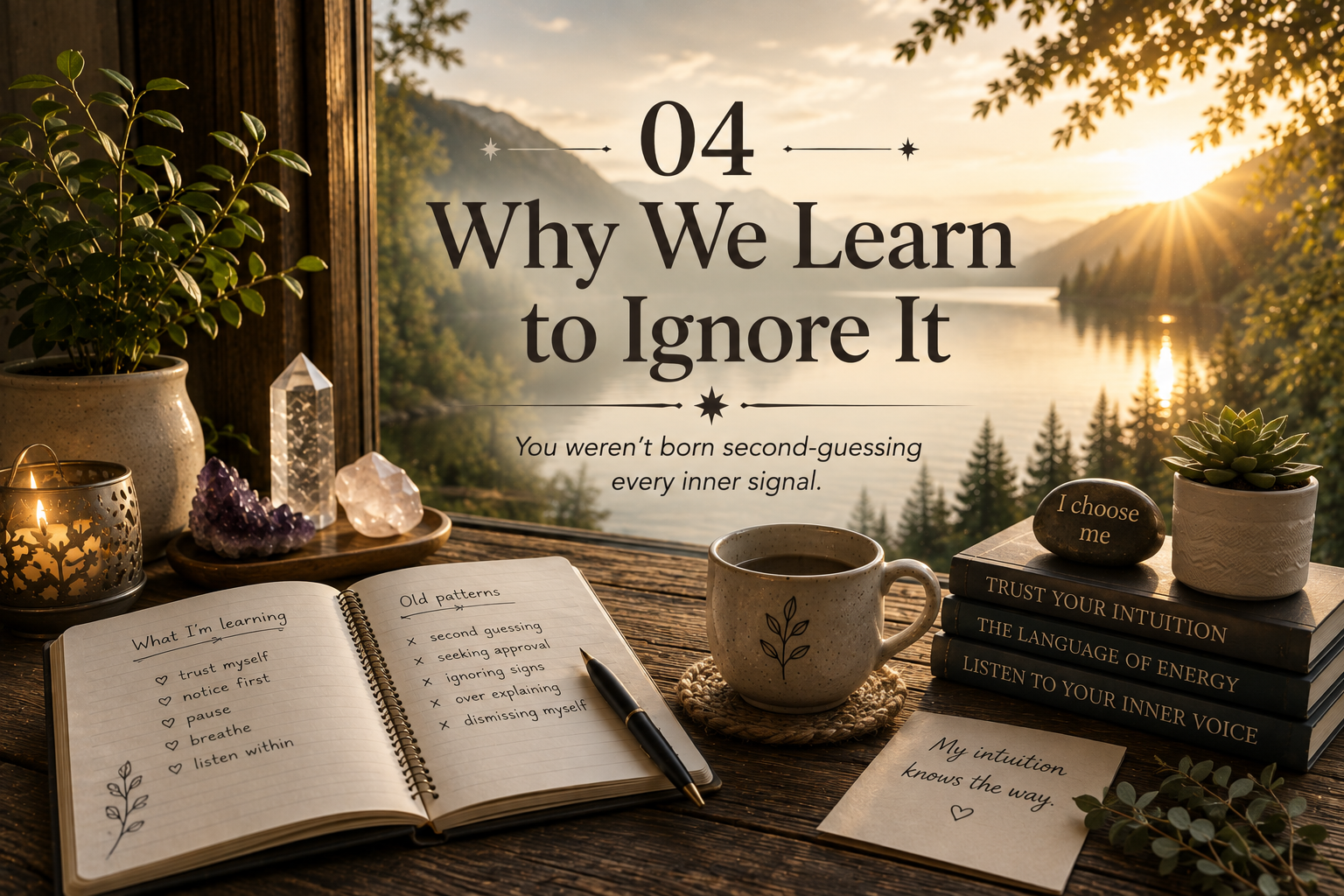
04 Why We Learn to Ignore It
Second-Guessing Yourself Is Something You Can Learn
You were not born questioning every internal signal. Over time, many things can teach you to look outside yourself first. Maybe someone frequently dismissed what you felt. Maybe being wrong felt embarrassing or unsafe. Maybe you learned to seek approval, keep other people happy, or wait for proof before trusting your own judgment.
Eventually, asking “What do I think?” can quietly become “What does everyone else think I should do?”
Learning to hear your intuition again does not mean ignoring advice or refusing outside information. It means remembering that your own response deserves a place in the conversation too.
READ THIS ✦
Self-Trust Is the New Self-Care
Psychology Today explores how repeatedly looking outside ourselves for certainty can weaken self-trust and how practicing independent choices can begin rebuilding confidence in our own judgment.
→ Read the Article
DO THIS NOW ✦
Step 1: Notice Where You Look for Permission
Think about a recent decision.
Before deciding, did you immediately ask someone else, search online, or look for reassurance?
Step 2: Ask Yourself First
Write down:
What do I think?
What do I want?
What feels right to me before anyone else weighs in?
Step 3: Make One Small Choice Without Checking
Choose something low-risk today and make the decision yourself.
The goal is not to prove you are always right. It is to practice letting your own judgment count.
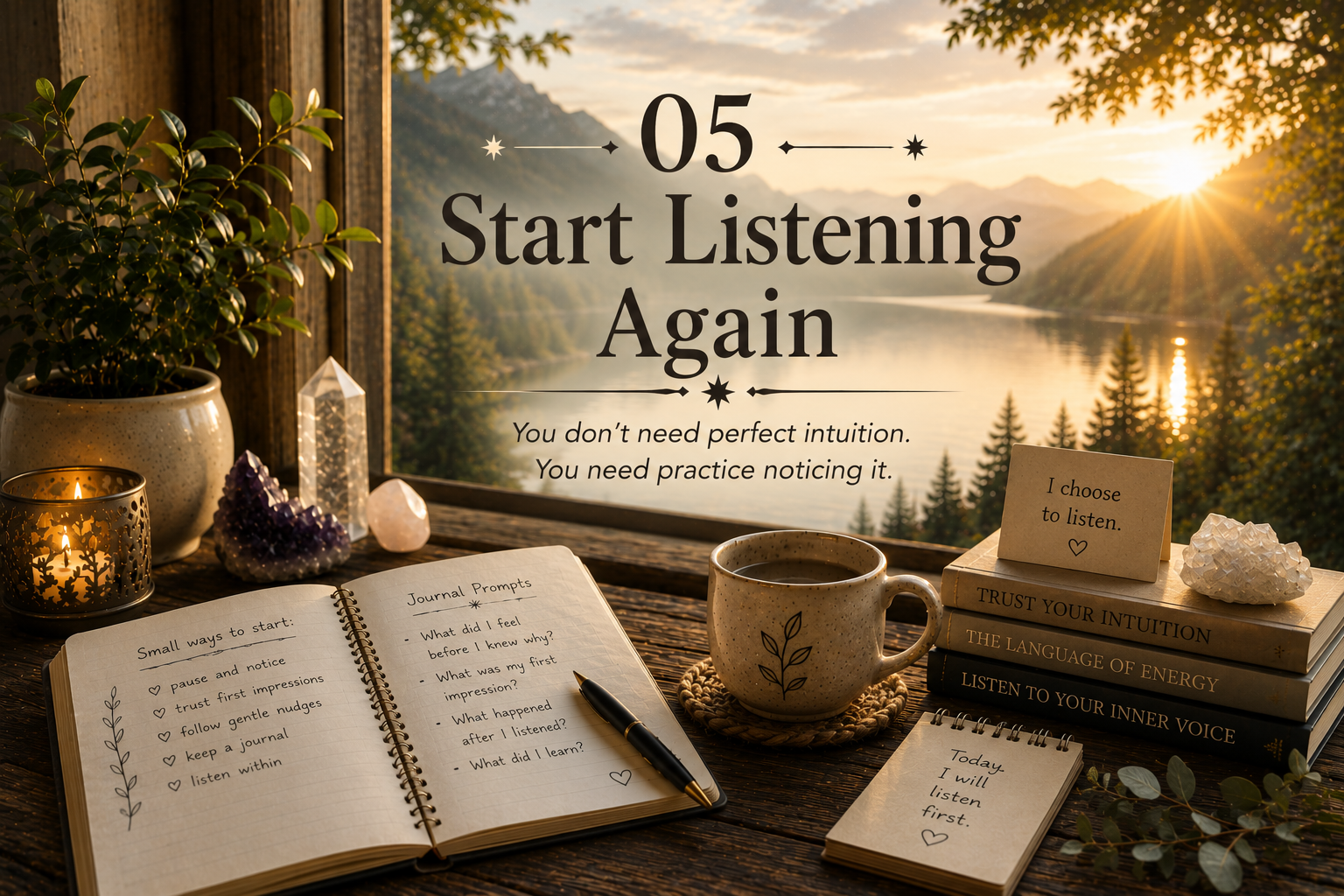
05 Start Listening Again
Self-Trust Grows Through Practice
Reconnecting with intuition is less about discovering a hidden ability and more about building a relationship with your own signals again.
Start small. Notice your first response before asking for advice. Make predictions and see what happens. Write down your impressions before you know the outcome. Pay attention to when your instincts are useful and when fear, assumptions, or old experiences may have influenced them.
You do not need to blindly follow every gut feeling. In fact, comparing your intuitive impressions with what actually happens is one of the ways you learn which signals are meaningful for you.
Every time you listen, observe, and learn from the outcome, you gather more information about yourself.
READ THIS ✦
Can You Improve Your Intuition?
Psychology Today explains that intuition can be strengthened through experience and feedback, including comparing your intuitive decisions with what actually happens afterward.
→ Read About Intuition
DO THIS NOW ✦
Step 1: Start an Intuition Log
For the next week, write down one intuitive impression each day.
Step 2: Record It Before You Know the Answer
Write:
What happened
What your first response was
How the signal felt
What you eventually chose
Step 3: Check the Outcome
Come back later and write what actually happened.
Do not score yourself as good or bad at intuition. Look for patterns.