
01: Choose Your Practice
Start With What You’ll Actually Return To
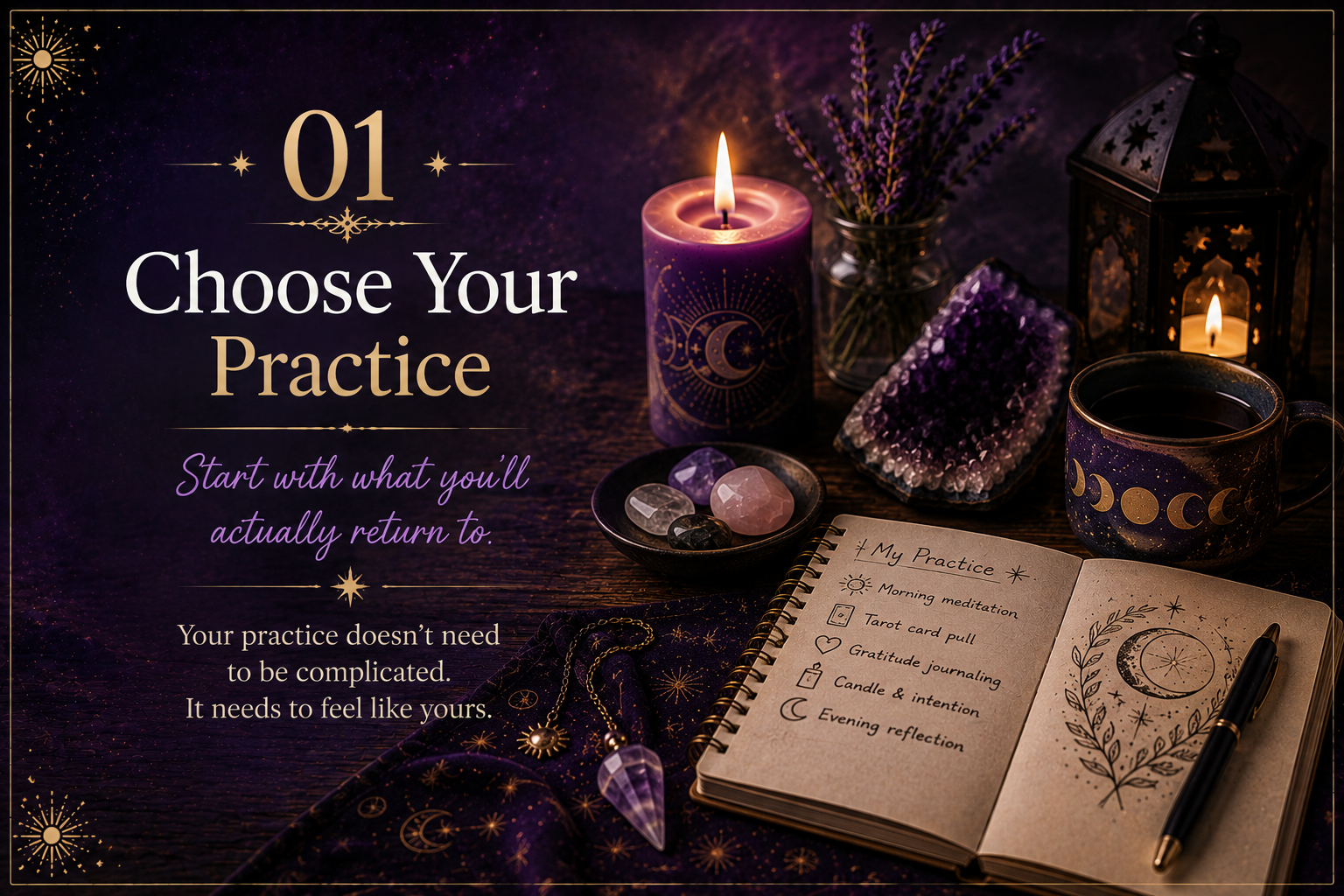
Your spiritual practice does not need to be complicated, time-consuming, or filled with dozens of tools. The best place to begin is with something that feels meaningful enough that you will actually want to return to it.
Your practice might include meditation, journaling, tarot, time in nature, prayer, intention-setting, working with crystals, or a simple evening reflection. You can combine practices later. For now, focus on creating one small experience that helps you slow down and reconnect with yourself.
There is no perfect spiritual routine. What matters is discovering what feels natural, supportive, and sustainable for you.
EXPLORE THIS ✦
Spiritual Wellbeing
Harvard’s Center for Wellness and Health Promotion explains that spiritual wellbeing can be cultivated in many different ways, including meditation, journaling, time in nature, reflection, prayer, and other practices connected to meaning and personal values.
→ Explore the Resource
DO THIS NOW ✦
Step 1: Choose One Practice
Choose one practice you genuinely want to try regularly. Pick something simple enough that it will not feel like another obligation.
Step 2: Make It Easy to Return To
Decide when and where you will practice. You might journal for five minutes before bed, meditate after your morning coffee, pull one tarot card in the evening, or spend ten quiet minutes outside.
Step 3: Try It for One Week
Return to your practice several times over the next week. After each time, briefly notice: Did I enjoy this? Did it help me slow down or connect with myself? Do I actually want to do it again?
BEFORE MOVING ON ✦
Have one simple spiritual practice you genuinely want to continue. You are not building the perfect routine. You are discovering what feels enough like you that you will actually come back to it.
02: Create a Rhythm
Consistency Creates Connection
Once you’ve found a practice you enjoy, begin creating a rhythm around it. This doesn’t mean forcing yourself into a strict spiritual routine or feeling guilty when life gets in the way. Consistency simply gives you more opportunities to slow down, reconnect, and become familiar with the practices that support you.
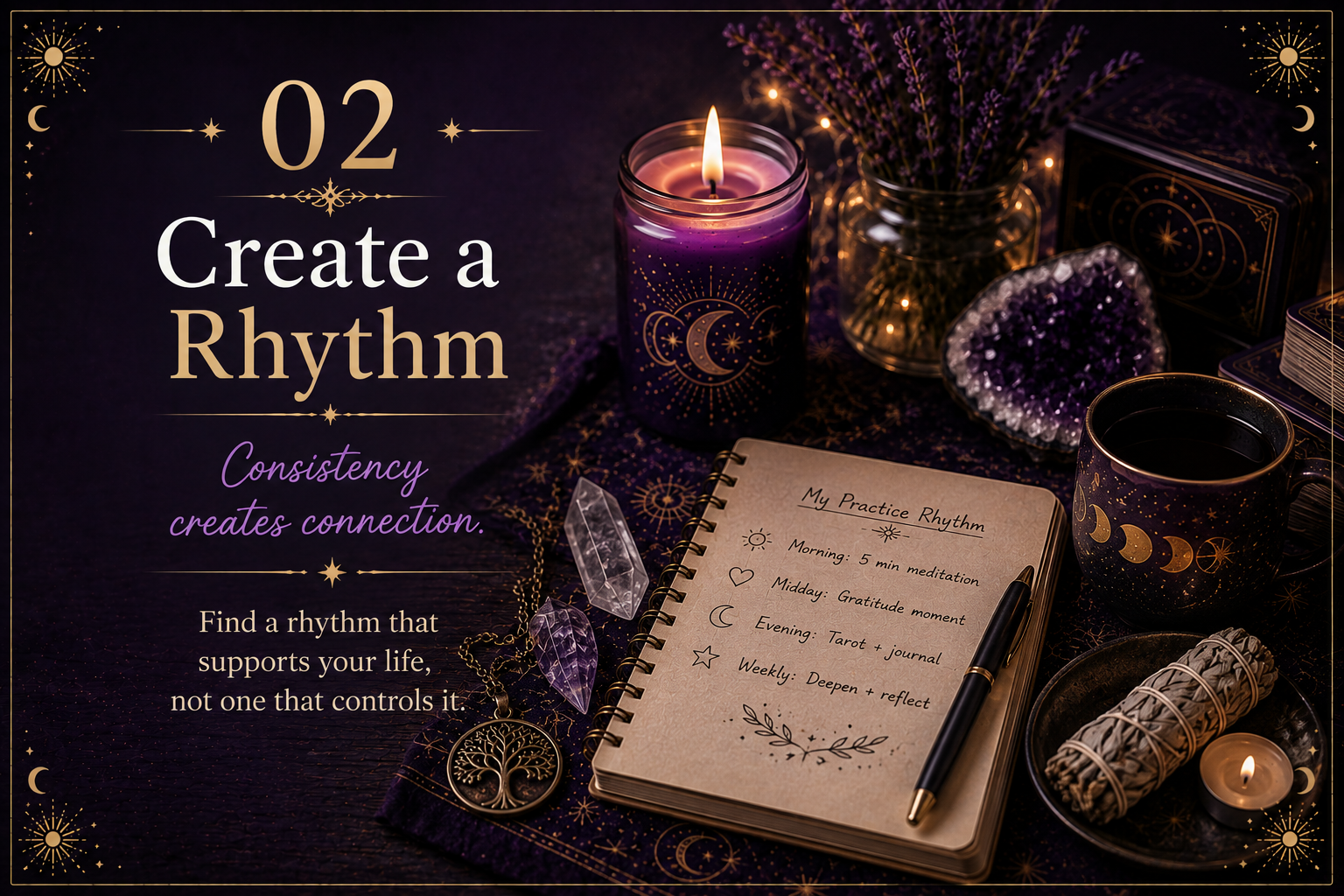
Your rhythm might look different from day to day. Maybe you meditate for five minutes in the morning, pause for gratitude during the day, journal or pull a tarot card in the evening, and spend a little more time reflecting once a week.
The goal is to create a rhythm that fits your life, not one that controls it.
READ THIS ✦
Wendy Wood Helps People Apply the Science of Habits in Everyday Life
The American Psychological Association explores research from habit expert Wendy Wood, PhD, showing how repeated behaviors become easier when they are connected to familiar situations and environments. Rather than relying entirely on motivation, creating simple cues and repeating a practice can help it become a more natural part of everyday life.
→ Read the Article
DO THIS NOW ✦
Step 1: Choose Your Natural Moments
Think about where your spiritual practice could fit naturally into your existing day. Choose one or two moments you already have, such as after waking up, during your morning coffee, after work, before bed, or during a quiet weekend morning.
Step 2: Give Each Moment a Simple Practice
Keep it small. You might meditate for five minutes in the morning, write one gratitude at lunch, pull one tarot card in the evening, or spend ten minutes journaling once a week.
Step 3: Try Your Rhythm for One Week
Follow your rhythm for the next seven days without worrying about doing it perfectly. At the end of the week, ask yourself: What did I naturally return to? What felt forced? What would make this easier to continue?
BEFORE MOVING ON ✦
Have a simple spiritual rhythm that fits your actual life and includes at least one practice you can realistically return to on a regular basis. Consistency should help you feel more connected, not more pressured.

03: Follow Your Intuition
Your Practice Should Evolve With You
A spiritual practice is meant to support you, not become another set of rules you feel obligated to follow. Something that felt meaningful a few months ago may stop resonating, while a practice you once ignored may suddenly feel worth exploring.
Following your intuition means checking in with yourself instead of automatically repeating a routine because you think you “should.” Notice what you need today, what feels supportive, and what you are genuinely drawn toward. Your practice is allowed to change as you change.
This does not mean every impulse needs to become a spiritual message. It simply means making room to notice your own needs, reactions, curiosity, and inner responses before deciding what belongs in your practice.
TRY THIS PRACTICE ✦
UCLA Mindful Guided Meditations
UCLA Health offers free guided mindfulness practices designed to help you slow down and notice your breath, body, thoughts, sounds, and present-moment experience. Their short Body Scan or Body and Sound Meditation can be a simple way to practice tuning inward before deciding what you need.
→ Try a Guided Meditation
DO THIS NOW ✦
Step 1: Check In Before You Practice
Before reaching for a tool or beginning your usual routine, pause and ask yourself: What do I need right now? What am I drawn toward? What would feel supportive today?
Step 2: Follow One Genuine Pull
Choose your practice based on your answer rather than habit. Maybe today you want to journal instead of meditate, spend time outside instead of pulling tarot cards, sit quietly instead of performing a ritual, or try something completely new.
Step 3: Notice the Difference
Afterward, write down how the practice felt. Did it feel natural? Did you feel more connected, grounded, curious, or reflective? Or did it feel like something you were forcing yourself to do?
BEFORE MOVING ON ✦
Be able to recognize the difference between practicing something because you genuinely feel drawn to it and doing it only because you think spirituality is supposed to look a certain way. Your practice belongs to you, and it is allowed to evolve with you.

04: Make It Part of Your Life
Spirituality Doesn’t Only Happen at Your Altar
A spiritual practice can become part of everyday life without requiring a special ritual every time. Sometimes it is simply the intention you bring into ordinary moments.
You might pause for gratitude in the morning, take a few mindful breaths during a stressful day, notice your intuition before making a decision, speak more intentionally, spend time outside, or reflect for a few minutes before bed.
The goal is not to make every moment feel spiritual. It is to bring more awareness, meaning, and presence into the life you are already living.
READ THIS ✦
Mindfulness Exercises
Mayo Clinic explains how mindfulness can be practiced during ordinary activities, not only during formal meditation. Simple moments of breathing, noticing your surroundings, walking, or paying attention to everyday experiences can help bring greater awareness into your day.
→ Read the Article
DO THIS NOW ✦
Step 1: Choose Three Everyday Moments
Pick three moments that already happen almost every day. This might be drinking your morning coffee, driving to work, eating lunch, walking outside, showering, or getting ready for bed.
Step 2: Add One Small Intention
Give each moment a simple practice. Take three mindful breaths with your coffee. Notice one thing you are grateful for at lunch. Check in with yourself before answering an important question. Spend a few minutes reflecting before bed.
Step 3: Notice What Actually Fits
Try these practices for one week. Keep the ones that naturally make you feel more present, connected, or intentional. Let go of anything that starts feeling forced.
BEFORE MOVING ON ✦
Have at least one spiritual or reflective practice that fits naturally into your everyday life. Your spirituality does not have to live only in rituals, tools, or sacred spaces. It can show up in the way you move through ordinary moments too.
05: Let Your Practice Evolve
There Is No Finish Line
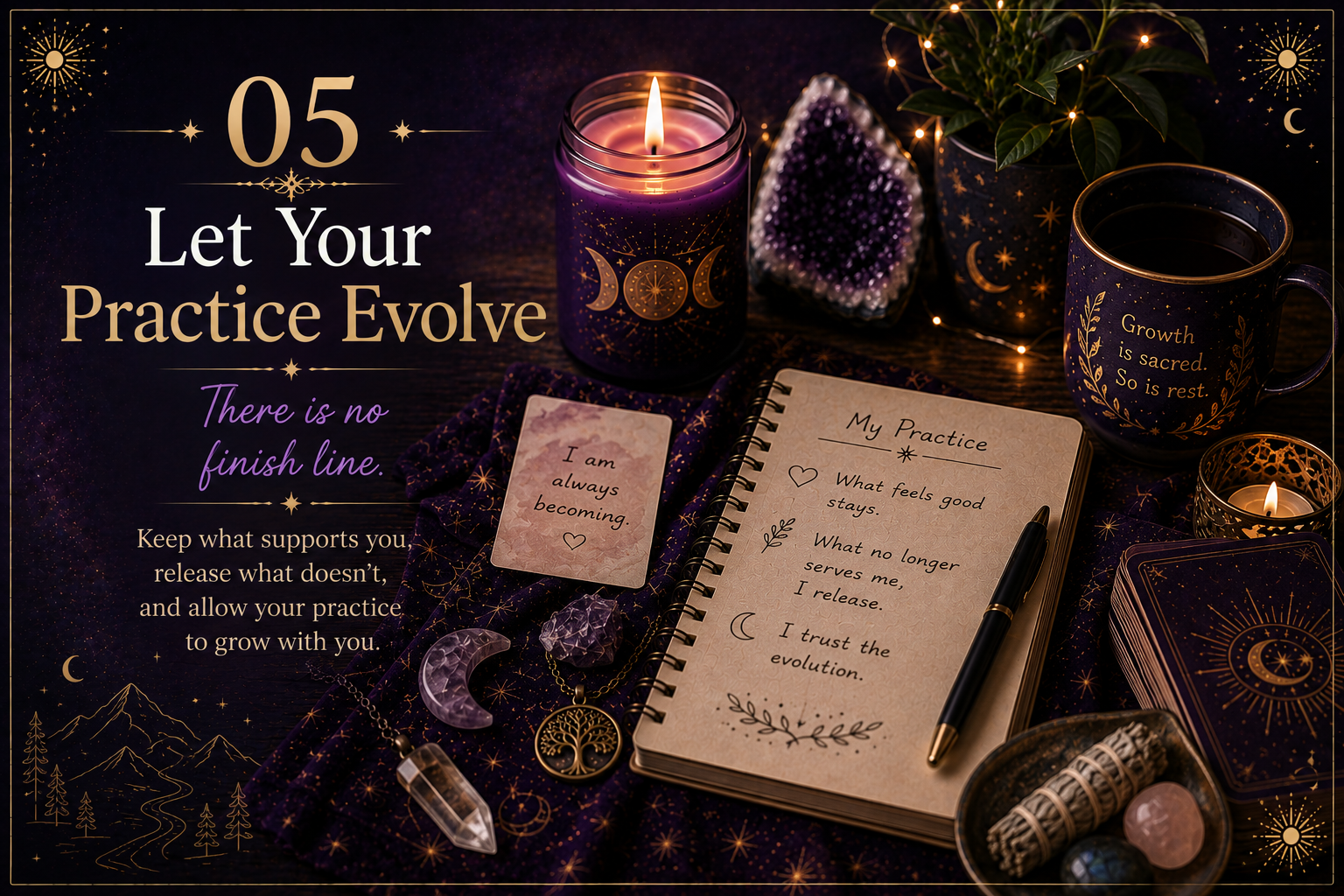
Your spiritual practice is allowed to change as you do. The tools, rituals, or routines that support you today may not be the same ones you need six months or five years from now.
Growth sometimes means adding something new, but it can also mean simplifying. You might outgrow a practice, become curious about something different, take a break, or realize that something you once loved no longer feels meaningful. None of that means you are doing spirituality wrong.
The goal is to keep checking in with yourself and allow your practice to reflect who you are now, not who you were when you started.
EXPLORE THIS ✦
Find the Right Mindfulness Practice for Your Life
Mindful explores why there is no single “right” practice for everyone and encourages creating a practice around your actual life instead of forcing yourself into a rigid routine. It emphasizes experimenting, adjusting, and discovering what genuinely works for you over time.
→ Read the Article
DO THIS NOW ✦
Step 1: Decide What Still Supports You
Look at the spiritual practices you are currently using. Write down what still feels meaningful, enjoyable, grounding, or helpful. These are the things you may want to keep.
Step 2: Notice What No Longer Fits
Write down anything that feels forced, boring, stressful, confusing, or like something you are only doing because you think you should. Give yourself permission to pause or release at least one thing that no longer serves you.
Step 3: Stay Open to What Comes Next
Choose one thing you are curious about exploring next, even if it is completely different from what you have been doing. Your practice does not need to stay the same in order to be real or meaningful.
BEFORE MOVING ON ✦
Know what you want to keep, what you are ready to release, and what you are curious about exploring next. Your spiritual practice is not something you finish building. It is something that can continue growing with you.