
01: Divination Tools
Create a Conversation With Your Intuition
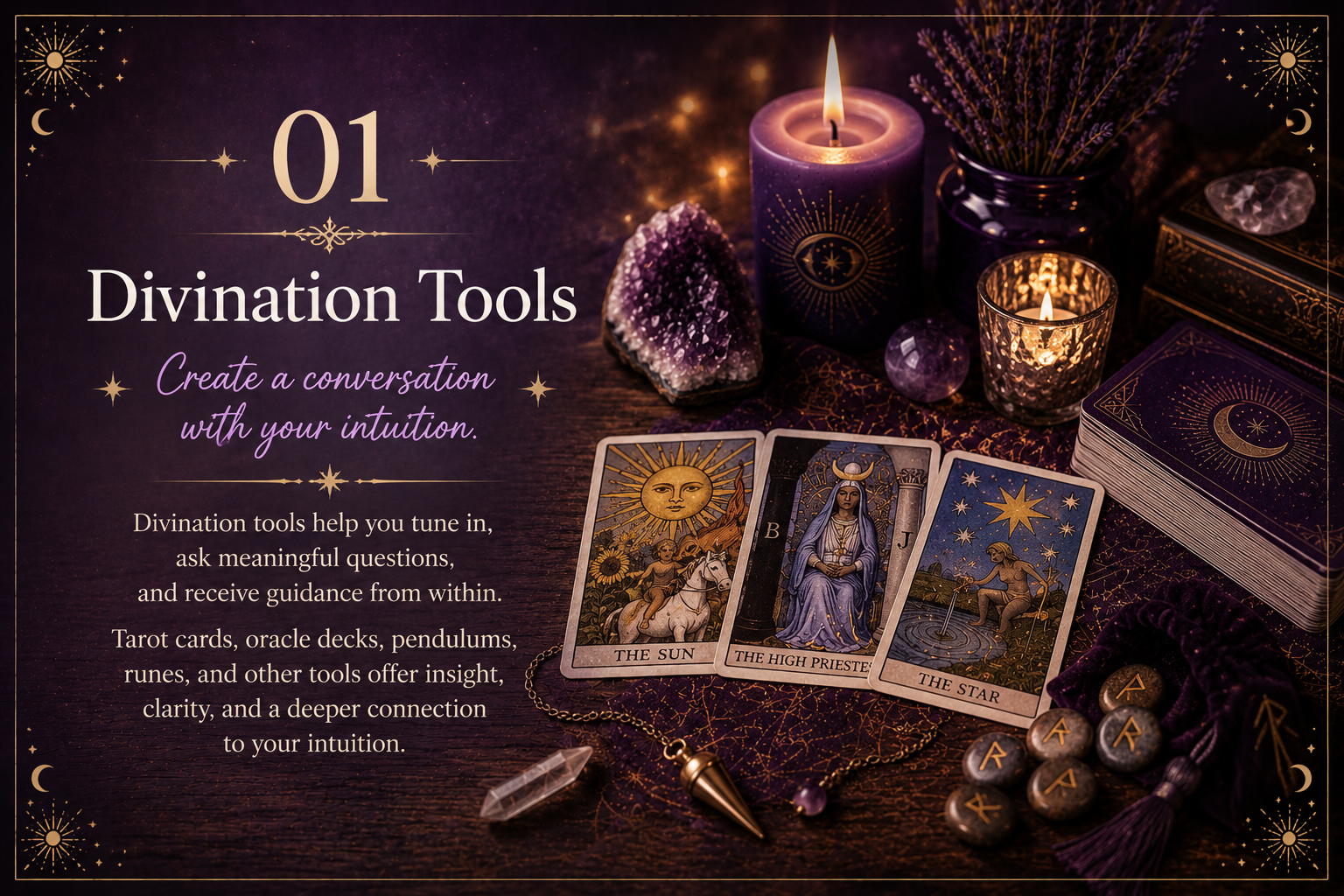
Divination tools are used to explore questions, gain perspective, and connect more deeply with your intuition. Tarot cards, oracle decks, pendulums, runes, and similar tools all work differently, but they share one purpose: giving you something outside of your usual thought process to reflect on.
Try thinking of divination less as predicting exactly what will happen and more as creating a conversation with yourself. A card, symbol, or pendulum response can bring your attention to feelings, possibilities, or questions you may not have considered before.
LEARN THIS ✦
How to Read Tarot Cards for Beginners
Biddy Tarot’s beginner guide walks through choosing a deck, becoming familiar with the cards, noticing what stands out before looking up traditional meanings, and starting with simple one-card readings. It is a practical introduction if tarot is one of the divination tools you want to explore.
→ Read the Guide
DO THIS NOW ✦
Step 1: Choose One Divination Tool
Pick one tool you are curious about. This could be tarot, an oracle deck, a pendulum, runes, or another divination practice. You do not need to learn several at once.
Step 2: Ask One Simple Question
Keep your first question low-pressure. If you are using cards or runes, try: “What would be helpful for me to pay attention to today?” If you are using a pendulum, choose a simple yes-or-no question that is not connected to a major life decision.
Step 3: Notice Before You Research
Before looking up the official meaning, write down what you notice first. What image, word, feeling, symbol, or thought catches your attention? Then look up the traditional interpretation and compare it with your first impression.
BEFORE MOVING ON ✦
Try at least one divination tool and notice whether using it helped you think about a question differently. You are not trying to prove that the tool can predict the future. You are discovering whether it helps you access reflection, perspective, or intuition in a way that feels useful to you.
02: Crystals & Stones
Choose What Feels Meaningful to You
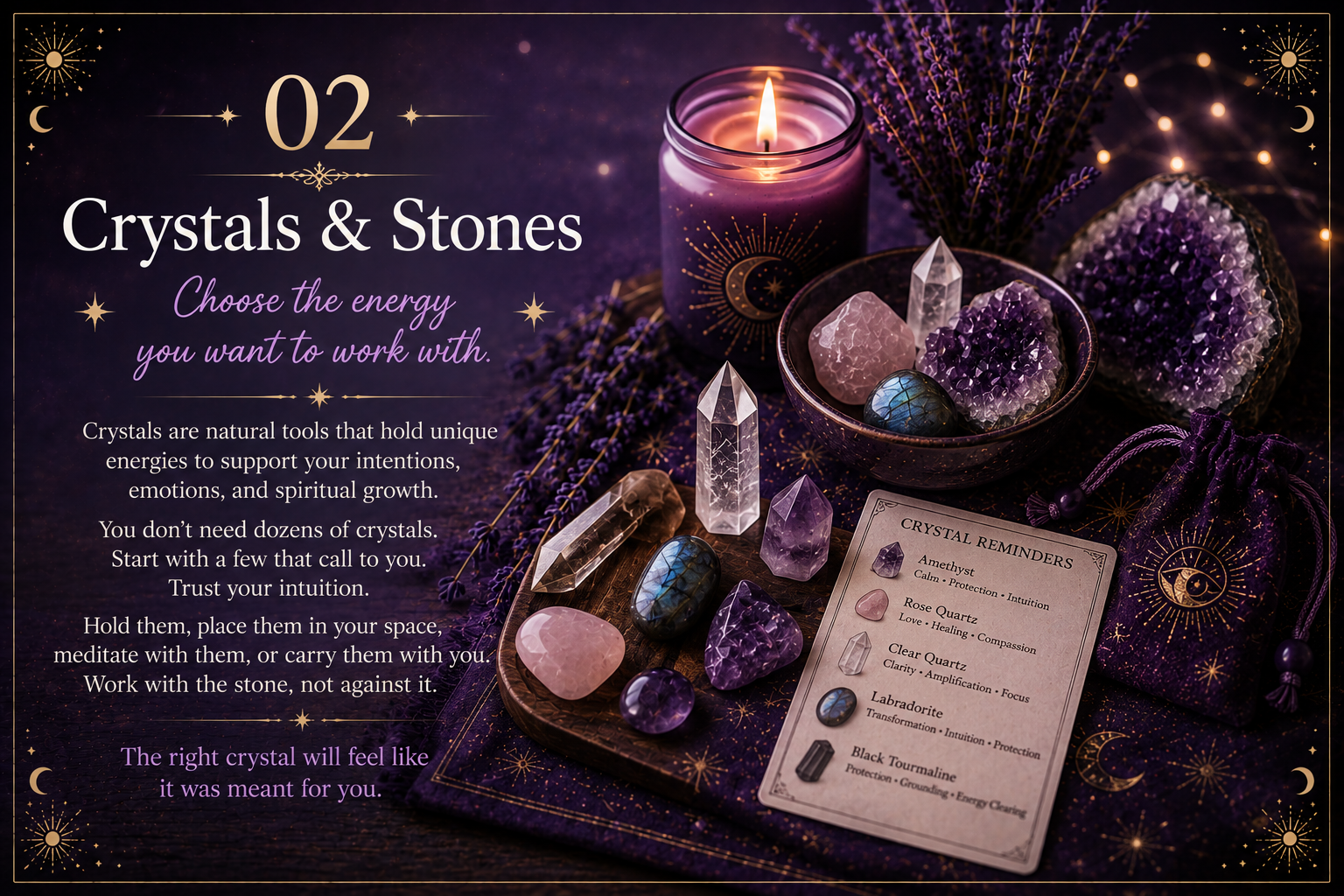
Crystals and stones are used in many spiritual practices as symbols for intentions such as grounding, clarity, protection, confidence, love, or reflection. Different traditions and modern spiritual communities associate particular stones with different meanings.
Those energetic or healing associations are spiritual beliefs rather than scientifically established properties. You do not have to accept every claim you hear about a crystal to enjoy working with one. A stone can simply become a physical reminder of an intention you want to carry into your everyday life.
EXPLORE THIS RESOURCE ✦
GIA Gem Encyclopedia
The Gemological Institute of America’s Gem Encyclopedia is a reliable place to learn what different gemstones actually are, how they form, their physical characteristics, history, and the lore surrounding them. It is especially helpful when you are beginning because it lets you separate the geology of a stone from the spiritual meanings you may choose to explore.
→ Explore the Gem Encyclopedia
DO THIS NOW ✦
Step 1: Choose Three Stones
Pick three crystals or stones that genuinely interest you. You can choose them because of their appearance, traditional meaning, how they feel in your hand, or simply because you are curious about them.
Step 2: Learn Both Sides
For each stone, write down what it actually is and then separately note the spiritual meanings commonly associated with it. For example, amethyst may be associated spiritually with calm or intuition, while geologically it is a purple variety of quartz.
Step 3: Give One Stone Your Own Meaning
Choose one of your three stones and decide what you personally want it to represent. Keep it somewhere visible, carry it with you, place it in your sacred space, or hold it during meditation or journaling. When you see it, use it as a reminder of the intention you chose.
BEFORE MOVING ON ✦
Know at least three crystals or stones you are curious about and choose one that feels meaningful enough to actually use in your practice. You do not need a huge collection. Start with what genuinely speaks to you.
03: Candles, Herbs & Smoke
Bring Intention Into the Physical World
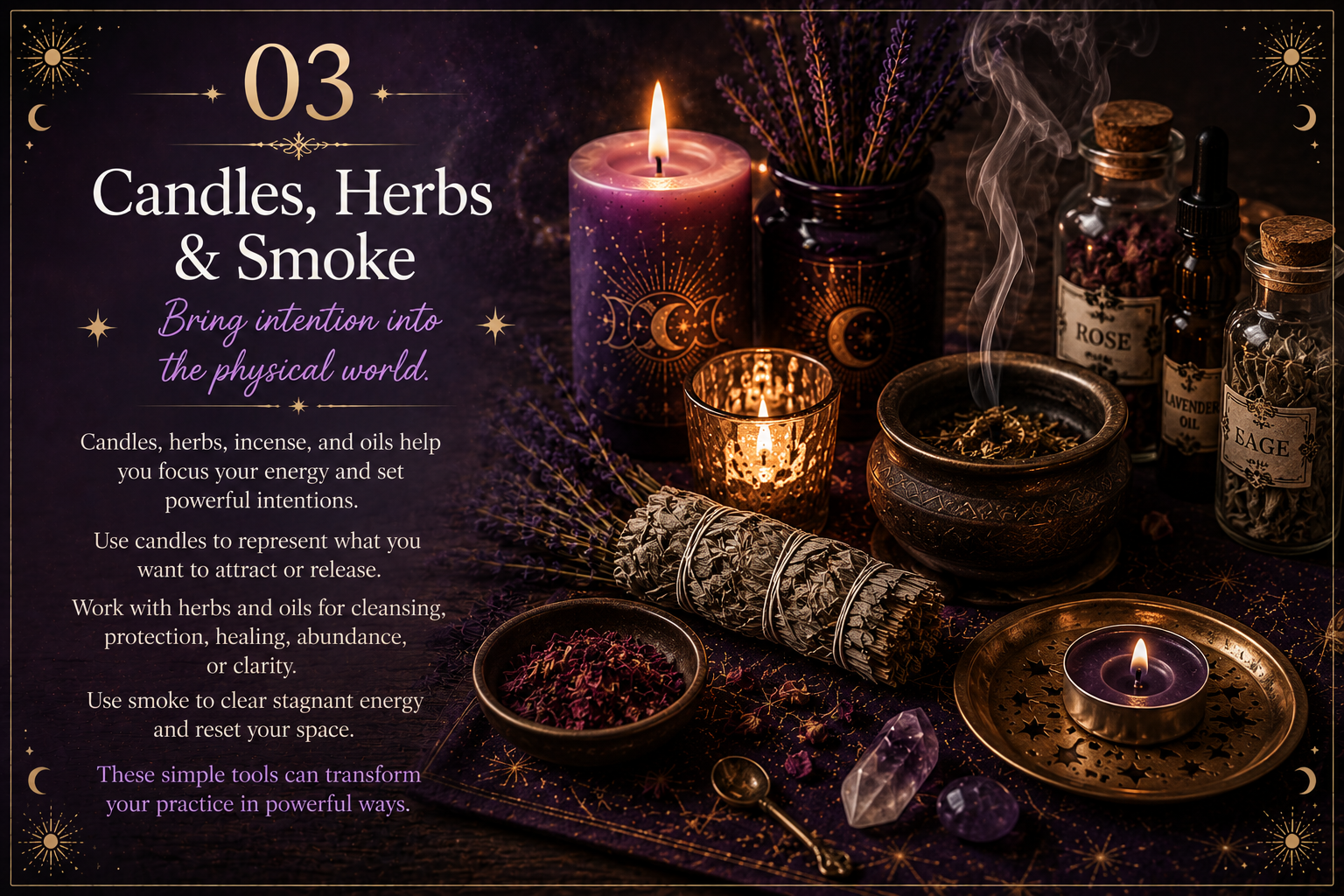
Candles, herbs, incense, oils, and scents have been used in spiritual and cultural practices for centuries. They can help create atmosphere, mark the beginning of a ritual, and give a physical symbol to something you want to focus on.
You might light a candle for clarity, choose an herb because of its traditional symbolism, use a scent to help you settle into meditation, or simply enjoy the way a particular object makes your space feel. These meanings do not have to be treated as proven supernatural properties. What matters is understanding the tradition or symbolism behind a tool and deciding what, if anything, it means in your own practice.
READ THIS FIRST ✦
The Hidden Health Dangers of Burning Incense
The American Lung Association explains the cultural and spiritual history of burning incense while also covering an important part beginners may not hear about: smoke affects indoor air quality. It offers practical ways to reduce exposure, including limiting how often you burn incense, improving ventilation, or choosing smoke-free alternatives.
→ Read the Article
DO THIS NOW ✦
Step 1: Choose One Sensory Tool
Choose one thing you are curious about using: a candle, dried herb, incense, essential oil, or another scent or natural object. Start with one instead of buying an entire collection.
Step 2: Learn What It Represents
Look into the traditional or commonly used symbolism behind your choice, then decide whether that meaning actually resonates with you. Write down what you personally want the tool to represent in your practice.
Step 3: Use It Intentionally and Safely
Include your chosen tool in one short practice. Light a candle while journaling, place an herb in your sacred space, or use a scent while meditating. If you burn anything, keep it attended, use good ventilation, and remember that smoke is optional. Your ritual can be completely smoke-free.
BEFORE MOVING ON ✦
Choose at least one candle, herb, scent, or similar tool that adds meaning to your practice and know why you are using it. The tool should support your intention, not become something you feel you have to use for your spirituality to “work.”
04: Sound, Symbols & Sacred Objects
Meaning Can Turn an Ordinary Object Into a Spiritual Tool
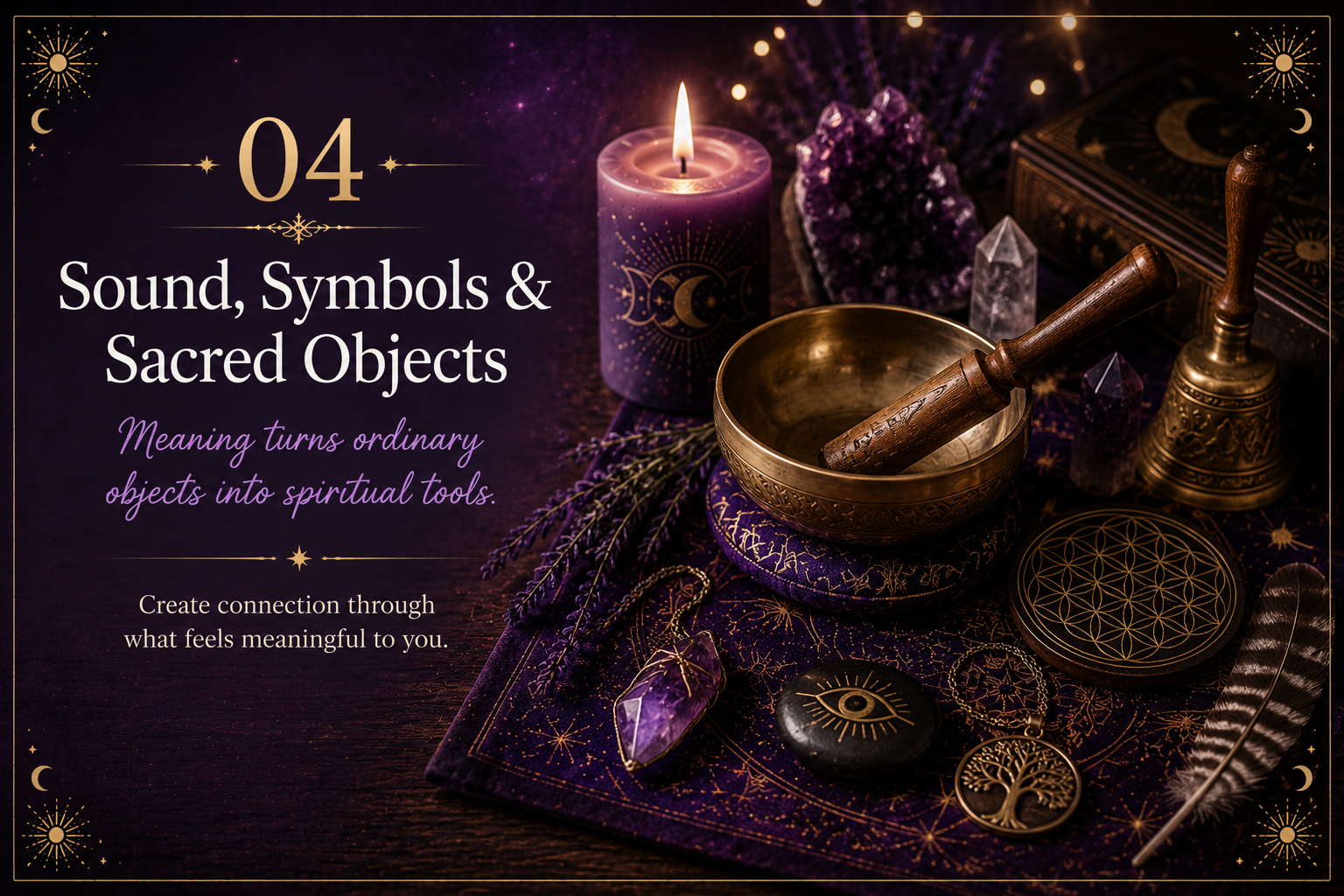
Not every spiritual tool has to be something traditionally labeled “spiritual.” A bell, piece of jewelry, feather, photograph, symbol, song, or object from nature can become meaningful because of what it represents to you.
Sound can help mark the beginning or end of a practice. Symbols can remind you of an intention, belief, or idea you want to carry with you. Objects can hold memories, represent values, or become physical reminders to pause and reconnect with yourself.
There is no universal meaning you have to follow. Many symbols and sacred objects come from specific cultures and traditions, so learning where they come from is part of using them respectfully.
EXPLORE THIS ✦
Encoded Meanings
The Smithsonian’s National Museum of African Art explores how objects, colors, materials, symbols, jewelry, prayer beads, and other items can carry layers of cultural and sacred meaning. It is a helpful introduction to understanding that the meaning of a spiritual object often comes from its history, context, and the people who use it.
→ Explore the Resource
DO THIS NOW ✦
Step 1: Choose One Sound
Choose a sound that helps you shift into a more intentional state. This might be a bell, singing bowl, chime, music, humming, silence, or another sound that feels grounding or meaningful.
Step 2: Choose One Symbol
Pick one symbol you feel drawn to and learn where it comes from before deciding what it means to you. This could be a moon, star, tree, spiral, flower, animal, geometric design, or another symbol.
Step 3: Choose One Sacred Object
Find one object that already feels meaningful to you. It might be jewelry, a photograph, a stone, a family item, something from nature, or an object connected to an important experience. Place it in your sacred space or use it during a ritual as a reminder of what it represents.
BEFORE MOVING ON ✦
Have at least one sound, symbol, or meaningful object you can intentionally use in your practice, and understand why it matters to you rather than choosing it simply because someone else says it should.
05: Build Your Personal Toolkit
Keep What Resonates. Leave What Doesn’t.
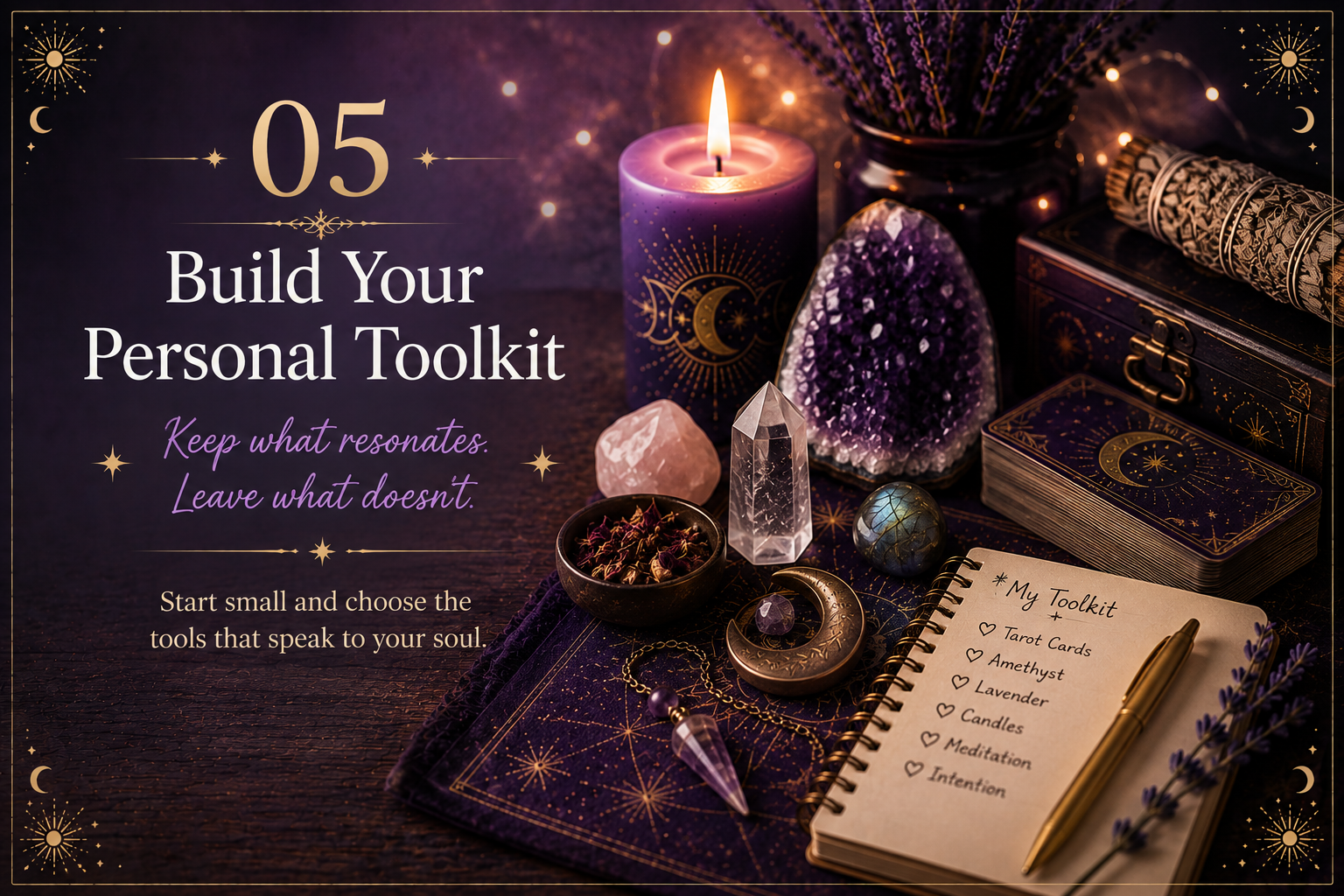
You do not need every spiritual tool, and you do not need to practice spirituality the same way someone else does. The purpose of exploring different tools is to discover what actually helps you feel more connected, reflective, grounded, curious, or intentional.
Your personal toolkit might eventually include tarot, crystals, meditation, journaling, candles, sound, ritual, time in nature, or something completely different. Some tools may become meaningful parts of your life while others simply will not click. That is okay.
Think of your toolkit as something that can change as you do. You are allowed to explore, keep what supports you, and leave behind anything that no longer feels useful.
EXPLORE THIS ✦
Spirituality
The University of Minnesota’s Earl E. Bakken Center for Spirituality & Healing explores spirituality as a highly personal experience connected with meaning, purpose, connection, nature, reflection, and different kinds of spiritual practices. It is a helpful reminder that there is no single practice everyone needs to follow.
→ Explore the Resource
DO THIS NOW ✦
Step 1: Review What You’ve Explored
Look back at the tools from this step: divination tools, crystals and stones, candles and herbs, sound, symbols, and meaningful objects. Write down which ones genuinely interested you and which ones did not.
Step 2: Choose Your Starting Toolkit
Choose three to five things you actually want to continue exploring. Your toolkit might include something physical, such as a tarot deck or crystal, and something you do, such as meditation, journaling, or a simple ritual.
Step 3: Give Yourself Permission to Change It
Write this at the bottom of your list: “I am allowed to keep what resonates, leave what doesn’t, and change my practice as I grow.”
BEFORE MOVING ON ✦
Have a simple personal toolkit made up only of practices or objects you genuinely want to explore. You do not need more tools to be more spiritual. Start with what feels meaningful and let your practice grow naturally.